How to save the Vaquita

Happy World Wildlife Day! Here is a great post by the President of The Ocean Foundation, Mark J. Spalding, and former Executive Director of the U.S. Marine Mammal Commission, Tim Ragen:

“EFFORTS TAKEN TO date by Mexico, the United States, and the global community have been helpful, but have not been sufficient to save the Vaquita from extinction. Conserving the species will require a fundamental change in the nature and rigor of recovery efforts—to save the Vaquita the next round of protection measures cannot be half-hearted, indecisive, or poorly implemented. We need a strategy that can be implemented immediately and then sustained for the long-term—it is simply disingenuous to suggest anything less will do. The following are twelve tasks that must be accomplished if we are to prevent the Vaquita from vanishing from the face of the earth.

Mexico must:

  1. Remove—in perpetuity—all gillnets from the species’ full range, including those that are being used legally to catch shrimp and finfish, and those that are being used illegally to catch the endangered Totoaba. We have long known that gillnets are the primary factor causing the decline of the Vaquita.
  2. Staunchly enforce the prohibition on gillnets using both aircraft, vessels, and aggressive judicial retribution. A prohibition on gillnets is effectively meaningless unless the Mexican government enforces that prohibition.
  3. Require all fishermen currently using gillnets to fish for shrimp to shift immediately to small trawls (e.g., red selectiva) if they want to fish within the historic range of the Vaquita. Small trawls are used effectively to fish for shrimp in other parts of the world and they have been shown to be effective in the northern Gulf of California. Switching gears will require some adaptability by fishermen, but does not pose an insurmountable problem.
  4. Require all fishermen currently using gillnets to target finfish to shift immediately to alternative, Vaquita-safe gear if they want to fish within the Vaquita’s historic range. An entangled Vaquita will drown in a gillnet used for finfish just as quickly as it will drown in a shrimp gillnet.
  5. Work with the United States, China, and other Asia nations to end the illegal fishing and trade of Totoaba. Gillnets are being used illegally to fish for the endangered Totoaba; the swim bladders of these fish are then sold in Asian black markets. Few human activities are as destructive to endangered wildlife populations as these absurd black markets.
  6. Begin training programs to educate and train fishermen in the use of new, Vaquita-safe fishing gear for both shrimp and finfish. Vaquita recovery efforts are not intended to harm fishermen, who will require assistance to shift to safe gear types.
  7. Support the work of international scientists to maintain the acoustic monitoring system developed over the past 5 years. Keeping track of the status of the remaining Vaquita population is critical to guide recovery efforts. The acoustic monitoring system used for this purpose is the best possible monitoring strategy available under these circumstances.

The United States must:

  1. Bring the full weight of key administrative departments and agencies to bear on this issue. Those include the Department of Commerce (including the National Oceanic and Atmospheric Administration and the International Trade Administration), the Department of State, the Department of the Interior (including the Office of Law Enforcement in the U.S. Fish and Wildlife Service), and the Marine Mammal Commission. Conservation organizations also are key partners in this recovery effort.
  2. The Department of Commerce, including NOAA and the International Trade Administration, must implement a full embargo of all seafood products caught in all Mexican fisheries if all gillnets are not removed immediately from the Vaquita’s historic range. NOAA also must continue to provide scientific expertise to Vaquita recovery efforts.
  3. The Department of State must send a message of strong concern to its Mexican counterparts regarding the pending extinction of the Vaquita. That message must convey that the United States stands ready to assist with recovery efforts, but that it also expects Mexico to implement, in a full and effective manner, the recovery measures needed to save the Vaquita. The Department of State also must make it clear to their Asian counterparts that the United States fully intends use all means available to it to stop the illegal trade in Totoaba.
  4. The Office of Law Enforcement of the U.S. Fish and Wildlife Service, Department of the Interior, must lead efforts to halt the illegal trade of Totoaba parts. Much of the illegal trade apparently goes through southern California, but it must be halted in all areas under U.S. jurisdiction.
  5. Conservation organizations are key partners in this recovery effort. Funding will be needed to support recovery efforts by the Mexican and U.S. governments. The conservation community may have access to resources not otherwise available to government departments and agencies, and they have the flexibility to respond more quickly to funding needs.

There is hope but we, collectively, face a choice. We must make it now and there’s no going back if we fail. If we cannot save this species when the problem is so abundantly clear and manageable, then our hopes and aspirations for other endangered species are little more than whimsical. The question is not whether we can do this—it’s whether we will.”

They bring up some great points in this article. First, they address that the Vaquita is in a better situation than most other endangered species. Obviously they are still in deep trouble, but in essence, if we can’t force ourselves to save the Vaquita, we might as well give up on the species that have more complicated threats.

Basically, this is article is a list of things that the governments of Mexico and the United States must accomplish to save the Vaquita. You are kidding yourself if you don’t believe the government is the only thing controlling the fate of the species. The government is what creates, implements, and enforces all the laws. The government is the only thing that can stop fishermen from using gillnets.

So, where does that leave us civilians?

In the past, I have always said sustainable seafood is a great way to help the Vaquita. And it absolutely is. But in this time of crisis, it will not be the thing that turns around the situation. Now, what we need to focus on is making sure the Mexican and U.S. governments accomplish the above 12 goals. The only way to do this is to tell them we appreciate their efforts up to this point, but that even more is needed in order to save the Vaquita. An extremely easy way to do this is to sign and share petitions such as:

VIVA Vaquita Petition

Save the Whales Petition

Greenpeace Petition English

Greenpeace Petition Spanish

Spreading the word, and especially these petitions, puts tremendous pressure on the government to implement the necessary plans to save the Vaquita. The official 2-year ban on all gillnets in the Vaquita’s full range was supposed to begin on March 1, but now it has been postponed to begin a month later, on April 1. We hope this delay was only because they still needed time to finalize legalities, distribute compensation, and prepare to enforce the ban. We need to make sure the Mexican government is 100% serious about this ban, because otherwise, there is absolutely no chance for the Vaquita. And before the next two years are up, the Mexican government needs to create a long-term plan. But this two year ban, if properly enforced, is a perfect first step. It should allow enough time for the development of Vaquita-safe nets for every type of legal fishery, and also be a test for the Mexican government to see if they can enforce a ban successfully. The illegal Totoaba fishery will prove an extremely difficult test to stop, but if enough people work together, it can be done.

The next few years are going to be remembered forever as either a complete failure to solve a relatively simple environmental issue, or as one of the greatest conservation success stories of all time. Let’s make it the latter.
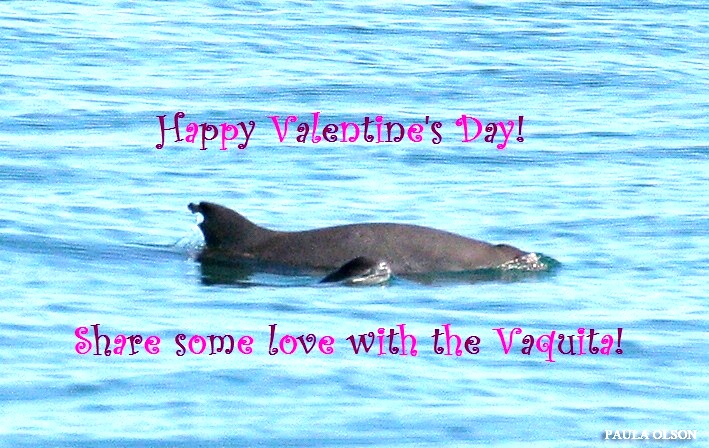
Happy Valentine’s Day!

Happy Valentine’s Day! Let’s make this V-day one for the Vaquita!

Valentine's Day Vaquita

If you missed it when it was live, please watch Dr. Anna Hall’s Vaquita lecture here: https://www.youtube.com/watch?v=pLqkbkJ_fJs.

It is definitely a must-watch with some wonderful information and insight from a world-renowned porpoise expert.

Some ways you can help the Vaquita on V-day are buying my Vaquita book, writing a letter to the Mexican government showing your appreciation for their actions, donating to CEDO or VIVA Vaquita, sharing a Vaquita post on social media, or making a sustainable seafood dish. It all makes a difference.

With love from the Vaquita.

The new books arrived!

I already received the books I ordered in the mail, and I am extremely happy with how they turned out. I feel every aspect of the first edition has been improved upon, and I promise you, even if you have the first edition, the second edition will be worth it. If you already planned on donating, this is a great way to do so, and you get a book about the Vaquita in return!

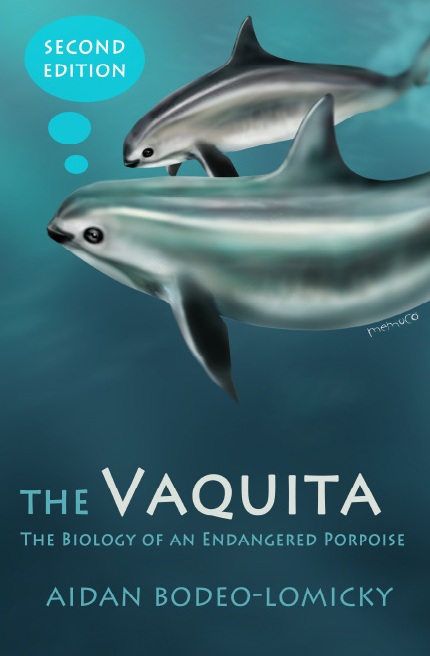
The Vaquita, Second Edition

All-new 6x9 size

All-new 6×9 size

Some of the many new pages and illustrations

Some of the many new pages and illustrations

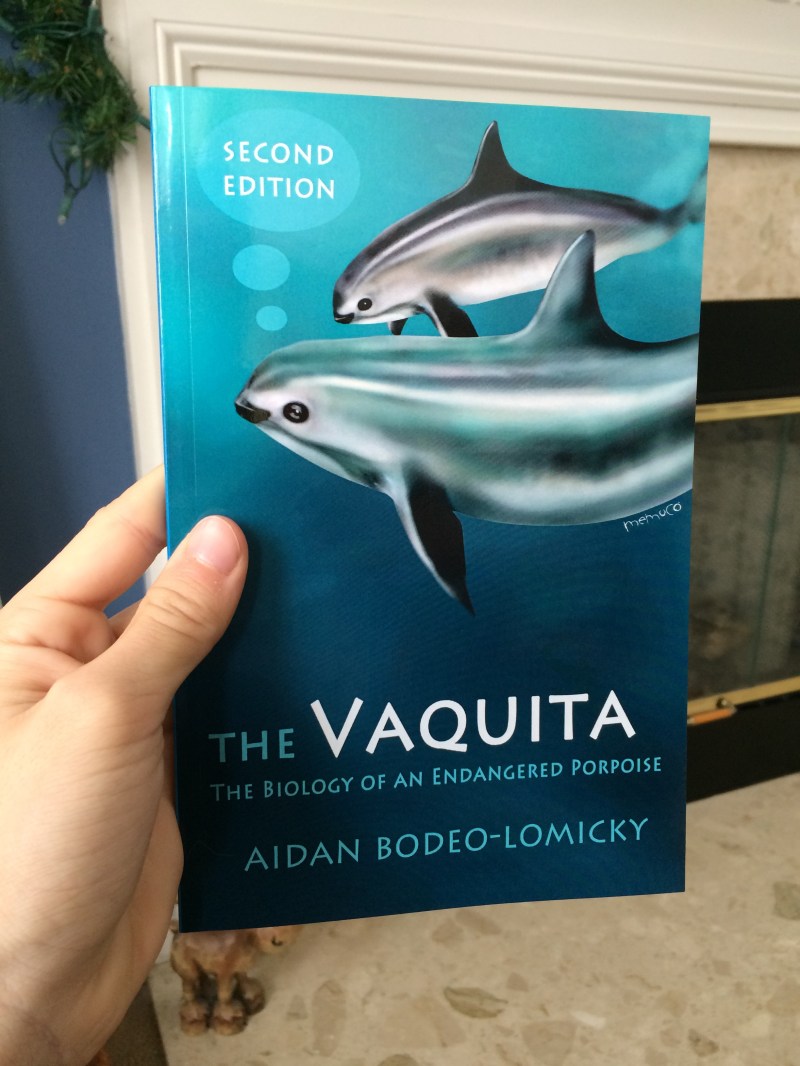
The second edition is here!

I am extremely excited to announce the arrival of the second edition of my book, The Vaquita: The Biology of an Endangered Porpoise!

2nd Edition Cover

Two years in the making, the all-new second edition is updated, expanded, improved, and is now in a more convenient and portable size! I have added 20 pages of bonus content and illustrations, as well as updated all the facts in the book, making it the most up-to-date and extensive source of Vaquita information out there! Now it not only teaches you about the Vaquita itself, but about the history of Vaquita conservation and how you can help write the next chapter of this incredible race to save a species. Even if you have the first edition, the second one will be a worthy purchase, especially because 100% of profits go toward Vaquita conservation!

Get your copy today!

https://www.createspace.com/5285494

Making a difference

If one person can make a difference, just imagine what a group can accomplish.

When I was very young, I was taught that we are all going to die, and life is our short window of opportunity to change the world.

Many people go through life having a fun childhood, getting a good job, raising a wonderful family, and then die content. This is the glorified image of a successful life. These people are happy, and they give their children the opportunity to have a happy, successful life as well.

However, these are not the people that are remembered for years after their death. Albert Einstein did not settle for this “successful” life, and he is one of the most well-known people in history; his name is synonymous with ‘genius.’ He might not have been as happy as an ordinary person, but he definitely affected the world more than most. He recognized his gifts and used his 76 years on this planet to accomplish incredible things. Without Einstein, who knows what our world would be like?

But you don’t need to completely abandon a normal life to be remembered…

Rachel Carson was an average marine biologist and writer. She wasn’t a genius; she wasn’t in a lab all day. She was simply conducting research projects with her colleagues and writing papers. But one day in 1957, she heard about the USDA’s fire ant eradication program, where pesticides like DDT were sprayed over large areas of land. She believed these chemicals were causing major environmental issues, many of which she witnessed firsthand. So over the next 4 years, she set out on a mission to find and share these issues with the world.

On September 27, 1962, Rachel Carson published Silent Spring, arguably the most important work of conservation writing ever created. This book changed the way we look at our effects on the natural world, and spawned the environmental movement itself.

Photographer Art Wolfe shows just how much of a difference she made:

http://artwolfe.com/2015/01/26/can-one-person-really-make-difference/

Rachel Carson remains my biggest inspiration, and without her, I have no doubts that I would not be doing what I am today. People like Einstein and Carson are proof that one person can make a difference in the world. Personally, I know I will not be satisfied with my life if I don’t have a lasting positive effect on this planet, specifically for the Vaquita. Fortunately for me, I am not alone in my desire to save this little porpoise. Now, more than ever before, we have a huge army of passionate individuals who will not let the few remaining Vaquitas slip away. If we all can show the same initiative, determination, and innovativeness of people like Rachel Carson, the Vaquita will be one lucky porpoise.

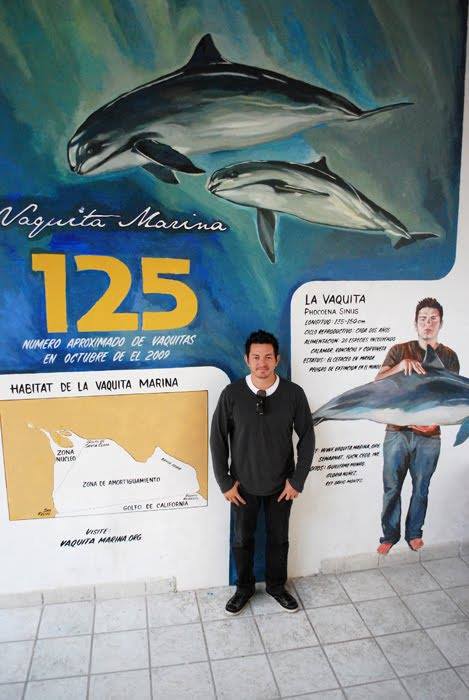
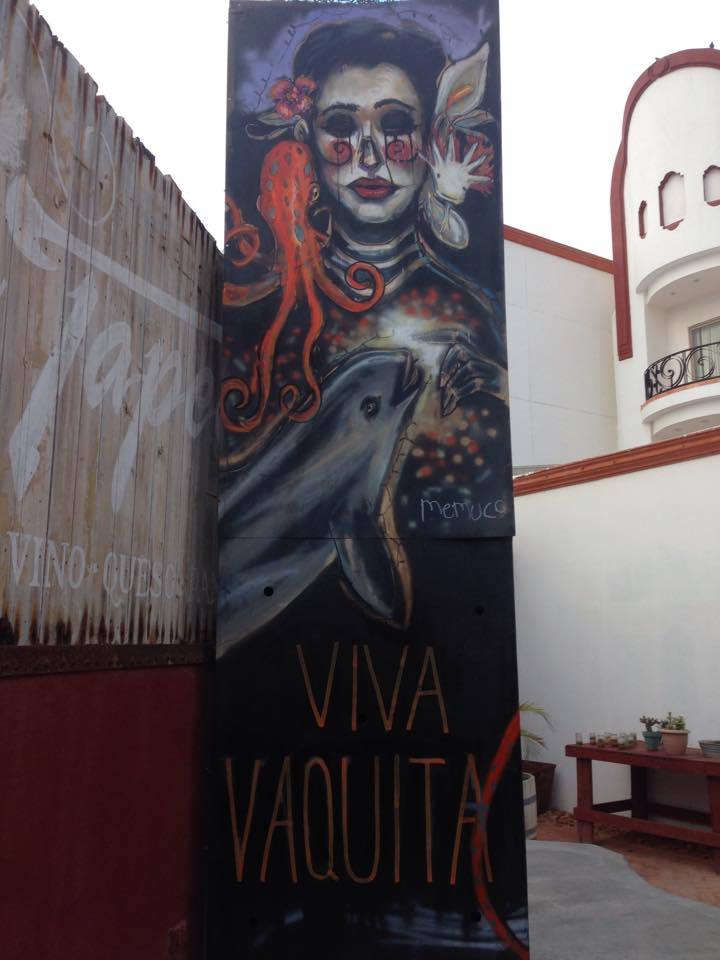
One person that is making a difference for the Vaquita in a unique way is Guillermo Munro Colosio, more commonly known as Memuco. He combines his incredible artistic skills with his compassion for nature to portray messages in an extremely compelling way. Some great examples are his Vaquita murals in Puerto Peñasco, one of the three fishing villages surrounding the Vaquita. He also creates infographics for endangered species, as well as paintings. He is a huge Vaquita warrior, and we love him and his work.

http://www.memuco.net/

Memuco and a mural he painted a few years ago in Puerto Peñasco

Memuco and a mural he painted a few years ago in Puerto Peñasco

Memuco's brand new mural in Puerto Peñasco

Memuco’s brand new mural in Puerto Peñasco

Memuco's beautiful new Vaquita painting

Memuco’s beautiful new Vaquita painting

To put the Vaquita’s current situation into perspective, imagine this:

You have a jigsaw puzzle. The picture on the box is simple and beautiful. However, when you open it up, the pieces are tiny and there are way more you thought. And you only have half an hour to complete it.

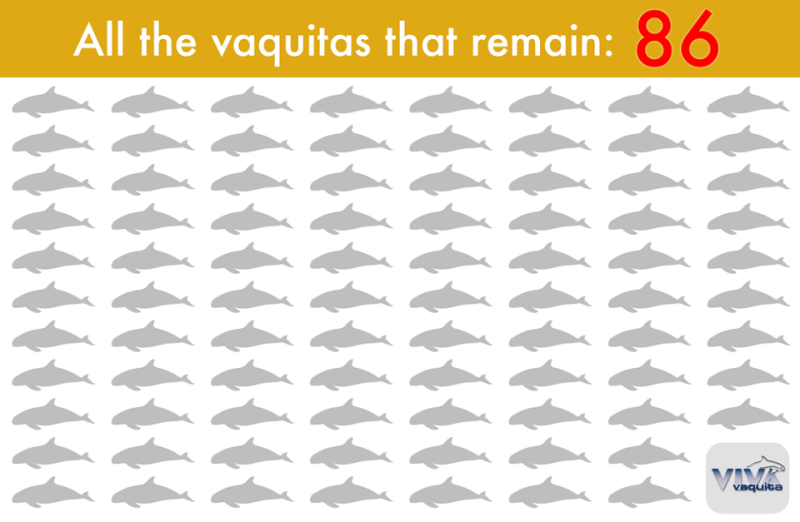
Not good, right? The Vaquita’s situation appears simple (the picture on the box): remove all gillnets. However, there are countless tiny pieces to the puzzle (fishermen, money, wildlife trafficking, government, etc.), and time is running out. There could be 86 Vaquitas left, and that could even be an overestimate. The point is, we are so close to the point of no return, that every little action has major consequences. Currently, there is a harmful algal bloom, called a red tide, going on in the Vaquita’s range. This may seem like bad news, and it could possibly be toxic to the Vaquita, but there is a huge upside: all fishing operations are on pause due to the danger of consuming contaminated sea food. So basically, it is like a ban that doesn’t even need enforcement. However, the red tide will fade away sooner or later, and the fishermen will be back on the water.

86

Luckily, strides have been made in the form of the new 2-year ban, which at least gives us a law to enforce starting in March. However, we still need to keep the pressure on the Mexican government to follow through with the ban. There need to be major short-term actions carried out immediately, and then we can worry about the long term. The most positive news is that the Mexican government says they are planning on using high-tech aerial drones to monitor the Vaquita’s range for any illegal fishing, which will relay the information back to enforcement so they can stop the illegal activity before it is too late. With the recent possible extinction of the Chinese Bahaba, many wealthy Chinese people have turned their attention to Mexico’s Totoaba, a very similar fish, for their “medical” needs. As we know, this recent increased (yet illegal) demand for Totoaba has left the poor Vaquita in the crossfire. Two more species are on their way to extinction mainly because of some ridiculous traditions. This demand needs to end, or else even strong enforcement on the water may not be enough to stop relentless poachers and cartels from killing both species, albeit one accidentally. Andrew Wright takes a closer look:

http://www.southernfriedscience.com/?p=18084

This will be a historical next few months for everyone in the Vaquita world. Thankfully, we don’t have to be helpless witnesses to all this. Don’t buy any seafood from the Gulf of California, Mexico, and make sure your local Chinese food restaurants aren’t selling Totoaba swim bladder soup. Keep signing the petitions to keep the pressure on, and I promise you, we really can do this.

Even more good news!

Happy Friday! As if you need any cheering up on a Friday, I have even more good news to go along with the new 2-year gillnet ban.

After 40 years, the United States has finally made the decision to ban all seafood imports that are not marine-mammal safe. The ultimate form of a boycott, not only will this save hundreds of thousands of marine mammals from unnecessary death, it will encourage Mexican fishermen to switch to safe nets due to the increased demand of sustainable seafood by the US. Read the full article, http://www.sustainablebusiness.com/index.cfm/go/news.display/id/26080, below:

“In a landmark settlement reached yesterday, more than 650,000 whales, dolphins and other “bycatch” from fishing will be saved from accidental killing.

Despite US efforts to protect marine mammals in its own waters, we continue to import seafood from countries that don’t abide by our laws.

The lawsuit forces the US government to adopt long overdue policies that ban imports from those countries. All countries we import from will have to meet the same marine mammal protection standards required of US fishermen – a 40-year-old provision of the US Marine Mammal Protection Act.

Fishing gear is the most significant threat to whale and dolphin populations worldwide. For example, Vaquita – the world’s smallest porpoise – is close to extinction because so many are caught in Mexico’s shrimp gillnets. There are only 97 left. Under the new policy, that shrimp would be barred from entering the US until fishing fleets meet standards that protect Vaquita.

Vaquita

“This law provides real, enforceable protections for marine mammals and sets up an even playing field that allows our fishermen to be competitive in the US market. If we’d had these standards 40 years ago, we wouldn’t be scrambling today to save the imperiled Vaquita. Thankfully, if this law is implemented, other species won’t share their fate,” says Zak Smith of the Natural Resources Defense Council.

Americans eat 5 billion pounds of seafood each year, about 90% of which is imported and half, wild-caught.

The settlement in the US Court of International Trade is on behalf of the Center for Biological Diversity, Turtle Island Restoration Network and Natural Resources Defense Council. The US government has until 2016 to develop standards that imports must meet.

It’s supported by an executive order on oceans from President Obama last year, which takes aim at rampant seafood fraud and the global black market fish trade. He directed federal agencies to develop a comprehensive program that deters illegal fishing and prevents illegally caught fish from entering the US marketplace (20-32% of all wild-caught seafood!).

Global Fishing Watch will be there to help by exposing illegal practices and creating a deterrent to breaking the law.”

This new law will tie in very nicely with all of VIVA Vaquita and the Muskwa Club’s plans during the new 2-year ban. All of these new developments, if well-implemented, might have come just in time to save the Vaquita.

If we can save the Vaquita through sustainable fishing, we are showing the world that we can coexist with animals without one or the other suffering. Also, it will be an example of what can be done to save a species, inspiring other conservationists to not give up. So what I’m saying is, not only does it matter for the Vaquita itself, but saving this species will have timeless global implications.

Greenpeace’s petition was a big part of this new ban, garnering over 320,000(!) signatures, each one sending a letter directly to the President of Mexico. But they made an important point:

“There are some missing measures that must be included for this [2-year ban] to be fully effective. The most important is to strengthen surveillance and enforcement. Illegal gillnetting in the Vaquita habitat is common and must be eliminated. We’re also urging the Mexican government to make this a permanent ban on gillnet fishing.

By the end of this month the proposal will have passed through consultation and be ready for a final draft. This doesn’t mean the campaign is over, as there may be more campaigning needed… there’s a big difference between what’s written on paper and what happens on the water.”

It is wonderful to have such a big powerhouse organization like Greenpeace fighting for the Vaquita.

Each day I get more confident that we really will save this species.

The 97 Effect

meme

We live in a technological world. Smartphones run in our blood, and social media in our minds. Nowadays you can’t walk around without seeing someone posting a picture on Instagram or Tweeting about their brunch. Because this is what I have grown up with, it seems completely normal to me. But for many adults, this stuff must be equally intriguing, confusing, and infuriating. But love it or hate it, one thing is undeniable…

The internet is taking over.

And without the immense reach and power of social media, literally everything I do relating to the Vaquita would be impossible.

I learned about the Vaquita online, as I’m sure 99% of the people that know about the Vaquita did. I then got into contact with some Vaquita experts through email. Then, in 2011, I started this website, albeit with low expectations. Since then, countless opportunities have come up for me because of this blog, the best example being the Muskwa Club finding me. And social networks are even more effective.

I check Facebook and Twitter every day, and I am increasingly amazed by the impact the Vaquita is causing. Literally millions of people are learning about and being touched by the Vaquita’s story every day, especially recently. It’s almost like every day is a Vaquita Tweetstorm.

Every major news outlet has covered the Vaquita’s predicament, and it really is beginning to get in the pop culture limelight. It’s a shame it took there being only 97 (possibly only 88 now) Vaquitas left for this kind of attention to occur, but better late than never, right? The number 97 seems to really speak to people, which I am coining ‘the 97 Effect.’ And I am confident that all this recent exposure and outcry towards the Mexican government is what pressured them into creating the new ban (see previous post).

Here are just a few examples of the Vaquita’s newfound fame:

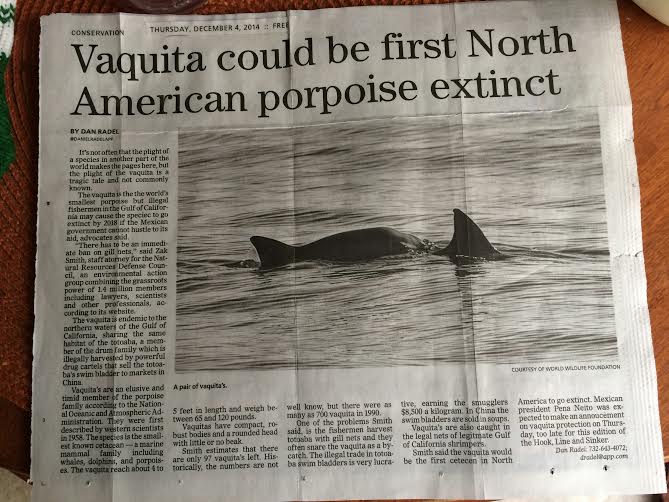
Clipping

Above is an example of news sources’ recent interest in the Vaquita. Maybe the number 97 has some magical qualities?

iFunny

Here is a screenshot from the Featured section of the extremely popular app, iFunny, featuring Save the Whales’ photo of a Vaquita model in a net. Notice how many likes and comments it already has (it was quite entertaining reading some of the 7,096 replies)!

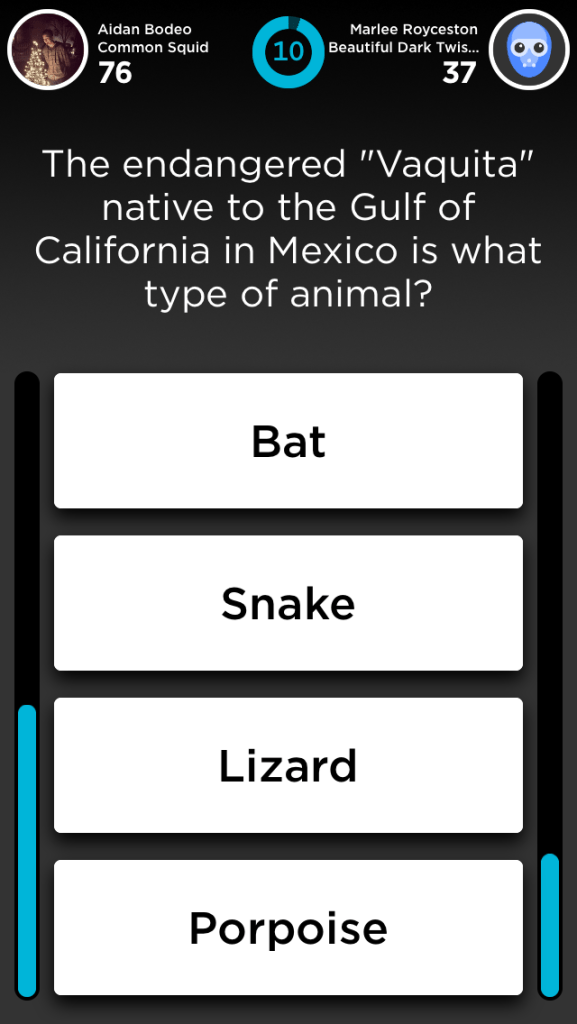
QuizUp

I was very excited to see my favorite app, QuizUp, have a trivia question about the one and only Vaquita in the Aquatic Life topic! (I think I know the answer). 😉

WWF Together

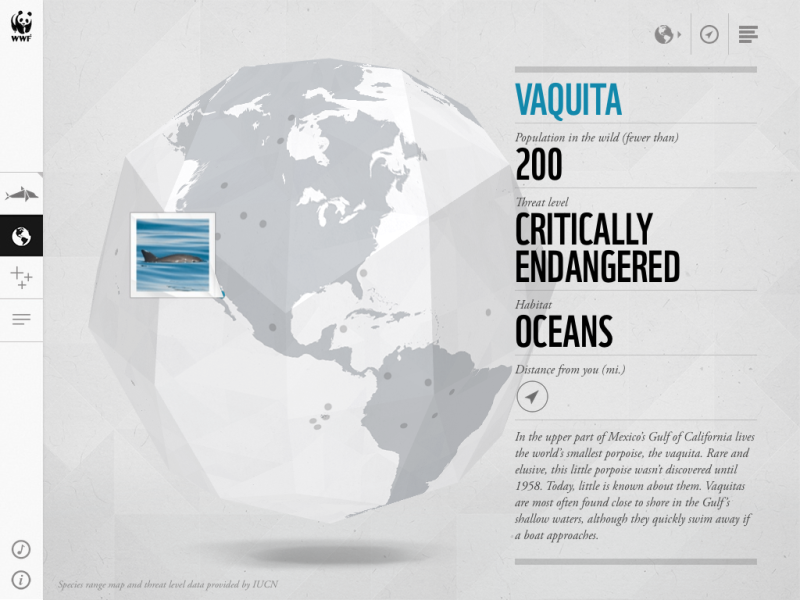
This screenshot is from the iPad app WWF Together, which is quite the immersive spectacle. This free app really makes you feel like you are in another world, both visually and sonically. If you have an iPad, this one is a no-brainer.

So thanks to the 97 Effect, the Vaquita is skyrocketing into fame. Using this exposure as a springboard, let’s make 2015 the best year yet for the Vaquita! A great start is donating to VIVA Vaquita (link in the top of the right sidebar, click on the baby Vaquita being carried). Thank you.

© Aidan Bodeo-Lomicky

© Aidan Bodeo-Lomicky


2014

2014, quite a year.

I’m sure this year was crazy for everyone in some way.

From the loss of Robin Williams to the Ebola outbreak, we have had a lot on our minds this year. However, many people had something new on their minds in 2014: the Vaquita.

This year was action-packed for our little hero. International Save the Vaquita Day was a smash hit, and everything was looking up with last year’s Official Norm law in mind. But this summer, we all took a blow to the gut: a new study showed only 97 Vaquitas remained.

It’s over then, right? 97? That’s too low to recover from. Especially if the government doesn’t make any changes. Well, they did change, but not for the better. They announced recently that they were NOT implementing a mandatory ban on gillnets in the Vaquita’s range, which is their only chance for survival. Not one person was able to stay completely optimistic at this point, and for good reason. It was basically over. Despedida, Vaquita.

But then, on the 25th, in what can only be described as a Christmas miracle, the unthinkable happened. The Mexican government announced a $37 million plan for a two-year ban on all gillnets in the Vaquita’s range, giving Muskwa enough time to perfect the Vaquita-safe nets as well as develop a long-term plan. Not only will the fishermen be paid to not fish, they can be paid to monitor the water for illegal fishing, therefore, in effect, converting the fishermen into “poaching rangers.”

This is the exact development that Vaquita conservationists have been suggesting for years. Now that this law will be in action, it is truly crunch time for us. Muskwa will be perfecting a cheaper and more effective Vaquita-safe net to distribute to the fishermen after the ban is over, as well as carrying out five other plans. All of us in the field of Vaquita conservation will be hard at work making the most of this valuable opportunity given to us by the Mexican government.

V-log had its best year in 2014, with over 9,300 views. And I was amazed to see the number of different countries that viewed my blog: 97. Sound familiar?

https://vlogvaquita.com/2014/annual-report/

Here’s to a much better 2015 for the Vaquita, because without that, there isn’t much hope for the species.

¡Viva Vaquita!

The rundown

I’m sure many of you who are reading this don’t really know what’s going on in the Vaquita world. And unless you are in VIVA Vaquita, I don’t really expect you to.

So here’s the rundown:

We all were crossing our fingers on Thanksgiving in hopes of the Mexican government’s Vaquita announcement being good news. In typical fashion, the announcement came over a week late. And it wasn’t really a public announcement. In summary, the announcement was that in San Felipe and El Golfo de Santa Clara (not Puerto Peñasco) shrimp (not corvina) gillnetting and longline fishing will be banned for a year, while compensating for the fishermen’s losses. At first, this sounds like good news, a strong start with a lot of potential success. Well, there’s one kicker they didn’t mention: it’s optional.

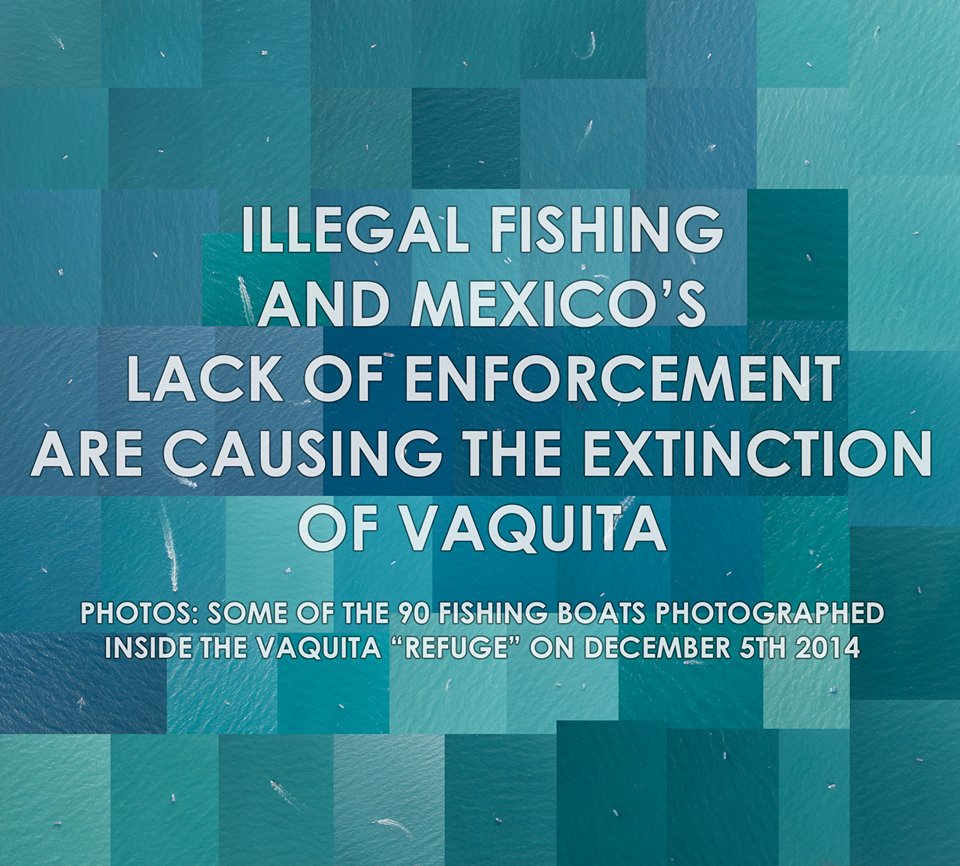
When I found this out, I felt like the world was collapsing. In terms of gillnet fishing, anything that’s optional means they aren’t going to do it. It’s just a plain fact. Even when it isn’t optional they still illegally fish. On December 5th, in the Vaquita Refuge, what is thought of as one of the few remaining safe havens for the Vaquita, 90 boats, many of which had gillnets were photographed in an aerial survey. 90. And that’s just in the Refuge.

Copyright © Joe Dlugo

Copyright © Joe Dlugo

So, it seemed to us at VIVA Vaquita that the Mexican government wasn’t taking CIRVA’s recommendations for a complete ban seriously. And after much, MUCH consideration and taking account for all variables and outcomes, here is the official statement from VIVA Vaquita:


URGENT ANNOUNCEMENT-

VAQUITA NEARING EXTINCTION!


In July 2014, at the 5th Meeting of the International Committee for the Recovery of the Vaquita (CIRVA), it was estimated that the Vaquita population had decreased to only 97 individuals, and the rate of decline had accelerated to an estimated 18.5% annually (CIRVA 2014). Recent evidence indicates that about 28 Vaquitas (29% of the current population) were killed in gillnets in the 2013/2014 period (Urrutia-Osorio et al. 2014). Despite CIRVA’s strong and urgent call for an immediate ban on all gillnets in the Vaquita’s range, as a critical measure to avoid the species going extinct in the next couple of years, the Mexican Government has not implemented any such ban. The shrimp gillnet fishery continues legally, and there is now rampant illegal fishing with gillnets inside the Vaquita Refuge. This is in addition to the illegal gillnet fishery for Totoaba, itself an endemic and endangered species, which has apparently expanded, and is now fueling the drastic decline in Vaquita numbers.

The Vaquita population most likely now numbers less than 90 individuals (perhaps much less), and is rapidly heading toward extinction, with a probable point of no return in the next year. Valuable time has been lost during the 2014 shrimp gillnet fishing season, with the Mexican Government delaying action, and vaquita numbers declining further.

In light of this, ¡VIVA Vaquita! is calling on the Mexican Government to immediately implement and enforce a two-year ban on all gillnets in the Vaquita’s range, as recommended by CIRVA. We ask all consumers to purchase and support only those Mexican seafood products (i.e., fish and shrimp) that have been caught with methods other than gillnets (methods such as trawls, longlines, or hook & line gear). Check product packaging for place of origin and ask your seafood servers/vendors to serve ONLY non-gillnet caught items. A two-year ban will buy time for the Vaquita, and allow for the full conversion of fisheries to more sustainable gear. Support for fishermen who are willing to use alternative gear (i.e., less damaging than gillnets) is essential for the survival of the vaquita, as well as other marine life in the Gulf of California.

References:

CIRVA (International Committee for the Recovery of the Vaquita). 2014. Report of the 5th Meeting of the International Committee for the Recovery of the Vaquita. Ensenada, Baja California, México, 8-10 July 2014, Unpublished Report, 38pp.

Urrutia-Osorio, M. F., A. M. Jaramillo-Legorreta and O. S. Osa-Nishizaki. 2014. Analysis of the artisanal fisheries’ fishing effort dynamics in San Felipe as a bycatch modeling tool for the vaquita (Phocoena sinus). Presentation at American Cetacean Society’s 14th International Conference, 7-9 November 2014, Newport Beach, CA.

We encourage you to avoid buying any seafood products from Mexico, unless you are positive they are from Vaquita-safe sources. This can only work if it spreads through social media like wildfire.

The Muskwa Club has also formed an extremely well thought-out five-part plan that we will begin implementing immediately.

The plan contains the following five parts:

1. Educate consumers in China and Chinese restaurants in America about the negative effects of the Totoaba trade for the Vaquita and the fish itself.

2. Design an efficient, cheap, and Vaquita-safe trawl net that will be given to fishermen as a replacement for gillnets.

3. Continue educating the public about the Vaquita’s plight, including International Save the Vaquita Day.

4. Reach out to celebrities due to their ability to raise funds for the ban and the safe nets, as well as begin a public outcry in favor of the Vaquita

5. Keep everyone’s spirits up in the Vaquita community. It is not too late for the species, unless we don’t work together or stay positive.

We will do everything in our power to make these five steps come true, but there is only so much a group of teenagers can do.

None of this will be possible without your generous support. We ask you to please donate to VIVA Vaquita, as now is a more important time than ever: http://www.vivavaquita.org/donations.html

VIVA Vaquita’s site has undergone a major makeover, which will be published any day now.

Another extremely helpful step you can take is to sign and share our Vaquita petitions, the newest being an urgent letter to the Mexican president and others: https://www.change.org/p/enrique-pe%C3%B1a-nieto-stop-the-extinction-of-the-vaquita-porpoise.

I am pleased to say the word is really getting out about the Vaquita. Nearly all of my relatives have called me saying they saw the Vaquita in the news, and my aunt even sent me this newspaper clipping:

Clipping

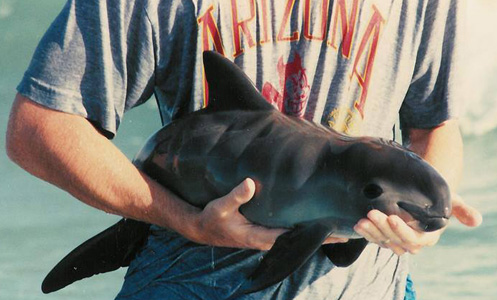
And any time you need any motivation to help the Vaquita, just take a look at this picture:

Vaquita Andrew Wright