Today, March 3rd, is World Wildlife Day. Today is the day to take the time to appreciate our planet’s incredible creatures. In recent years, we have been depleting our world’s natural resources, especially our amazing animals. The Vaquita is one of these animals. We cannot afford to lose it in the fight against extinction, and there are many ways to help the Vaquita today.
One way is to purchase an awesome Beach Bar Radio ¡VIVA Vaquita! t-shirt, where all proceeds go to the Vaquita! The campaign ends in 28 days and their goal is 50 t-shirts. I will be getting one for my birthday!
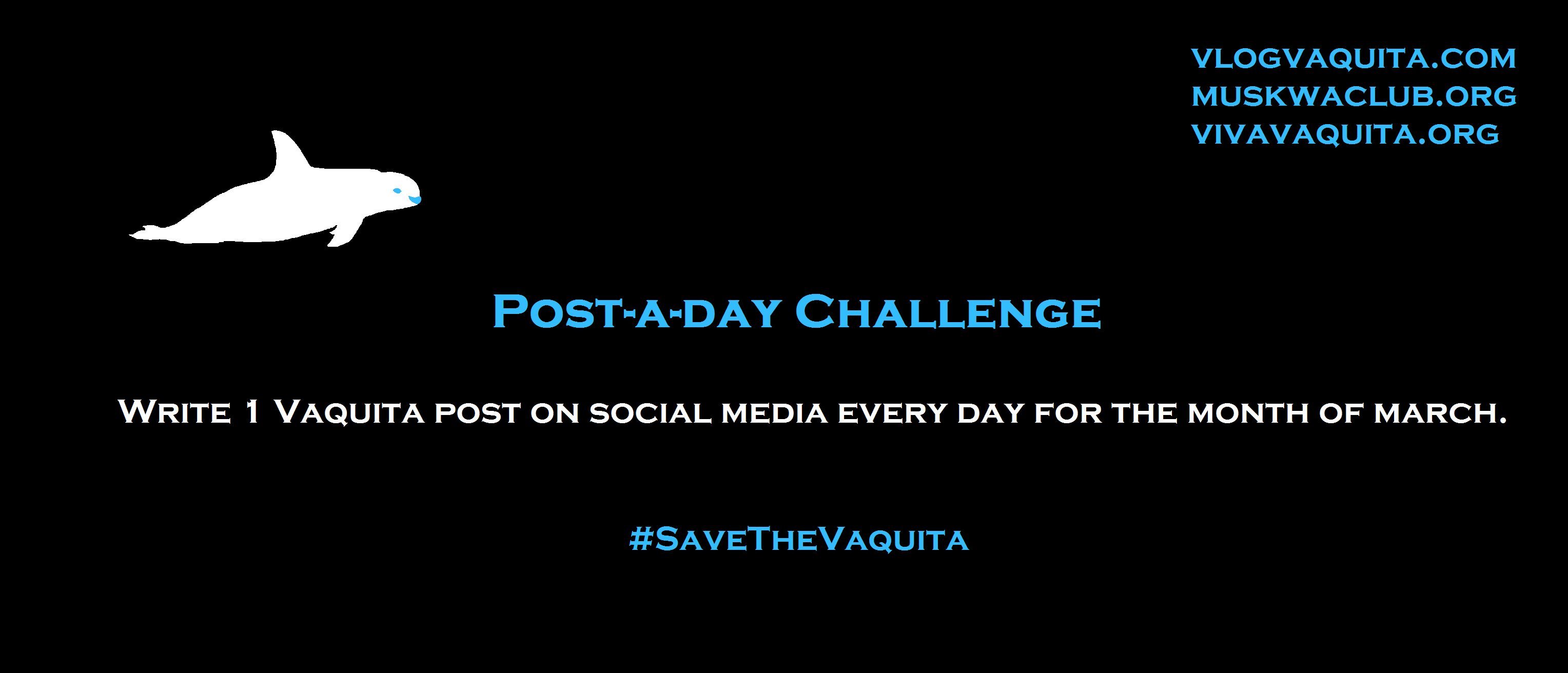
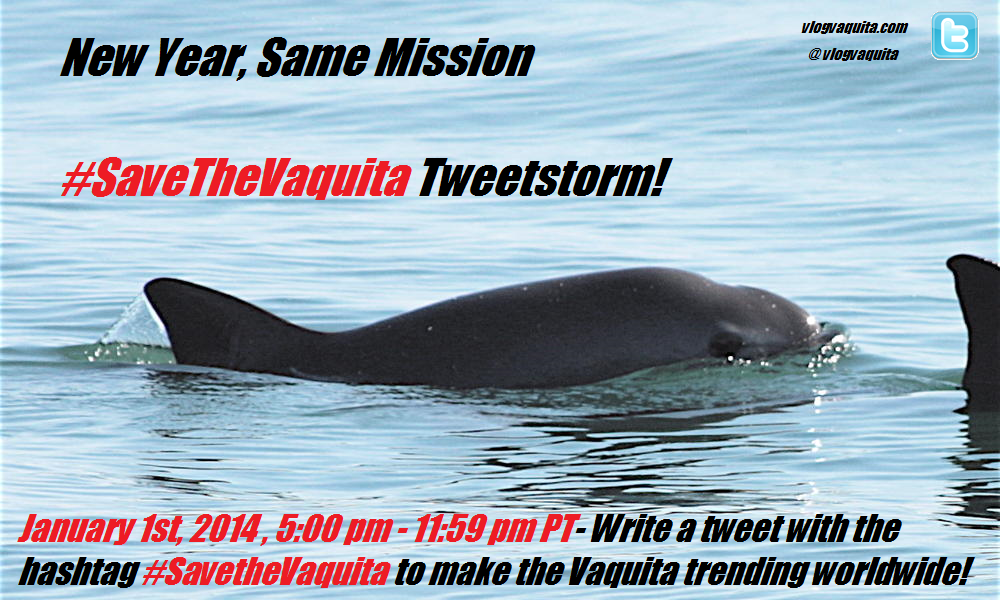
An even easier and free way to help the Vaquita is to participate in the Post-a-day Challenge! Simply write at least 1 post on social media every day for the entire month of March. #SaveTheVaquita
Of course, there are many other ways to help the Vaquita, such as cooking to save the Vaquita, or just by telling your neighbors about the world’s most endangered marine mammal. No matter how big or small your contribution is, just know that the Vaquita greatly appreciates it!
Please participate in our newest campaign: the Vaquita “Post-a-day Challenge!” We are challenging you to write at least one Vaquita post on social media every day for the entire month of March (already starting tomorrow!). Please let us know if you are participating (via comments, posts, or tweets), and share the banner below to spread the word! Also, if you read this after March 1st, please still participate. It is much better late than never! #SaveTheVaquita!
Also, keep an eye out on Paws on Controls, a really neat activism website that will be featuring an article about the Vaquita and V-log in the near future.
It all started on August 8th, 2010, when I was 10 years old. At the time, I had a really strong fascination with Sperm Whales. I was looking for a way to symbolically adopt one, which led me to the Save the Whales website. In the top right corner of the page, I noticed a picture of a little gray porpoise that said “Help Save the Vaquita!!! The World’s Most-Endangered Cetacean.” I had heard of the Vaquita before from one of my marine mammal field guides, and I remember loving how they looked. But I had no idea they were endangered. I started to read about this mysterious creature called the Vaquita. Something about it evoked an emotion that I had rarely felt before. A mix of fear, curiosity, vulnerability, sadness, and determination. I could not believe it was so rare, and that is was still decreasing. How could this be happening? I knew that I had to help it.
I scrolled down and clicked on the link to ¡VIVA Vaquita!, where I was captivated even more. I entered this into the contact box, “How much money is usually donated? Is $30 good? And can I learn more about vaquitas? Thanks!” A few days later, I received a package from Dr. Thomas Jefferson, containing a bunch of things to help me learn about the Vaquita, such as some brochures and a magazine that focused on them. I was hooked. A little over a year later, on September 27th, 2011, I started the website that you are reading this post on. I have always been obsessed with ¡VIVA Vaquita! and look up to them like a celebrity, which they are, in my eyes.
They are the world’s leading Vaquita conservation group, and their work is unparalleled in the activism community. That is why their email to me last night completely shocked me. They invited V-log to become an official member of ¡VIVA Vaquita! I hope our new partnership will create some amazing new opportunities, and I will be sure to keep everyone updated. I would like to thank ¡VIVA Vaquita! again for continuous inspiration and for asking me to join their incredible organization!
In other news, the Muskwa Club will have some big announcements coming within the next few months, so stay tuned.
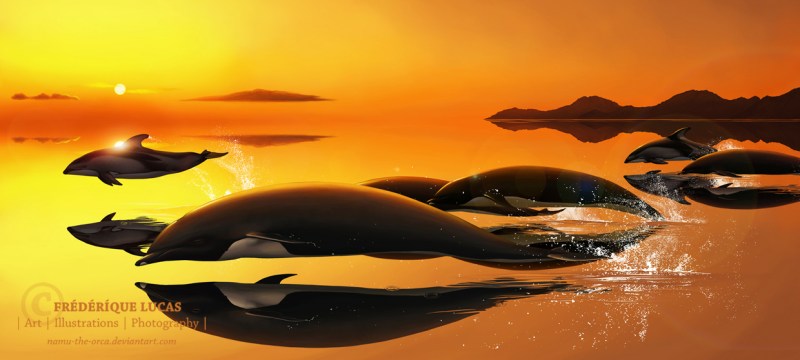
17-year-old Frédérique Lucas from the Netherlands, known on deviantART as Namu the Orca, is the Muskwa Club’s first international member! She is an extremely talented artist with a passion for nature, especially cetaceans. She has agreed to do some Vaquita artwork to help raise awareness for the world’s most endangered marine mammal, so keep an eye out for some incredible Vaquita paintings in the near future!
The Muskwa Club’s newest project is: Viva Vaquita!—The Musical! Here is an article about it from Muskwa’s latest newsletter:
“Muskwa’s latest harebrained scheme continued to take shape this month. Viva Vaquita!—The Musical is already gathering widespread support amongst the South Bay and Peninsula theater communities.
The full-length musical will follow the basic plot line of Muskwa’s YouTube serials while injecting lively musical numbers in a Baja California setting.
Muskwa held the first development meeting on December 12 at Peninsula High. President William Whittenbury and local theater veteran Ashley Trutanich discussed the various aspects of musical production, including costs, sets, and necessary personnel. Muskwa’s musical will be original, so the organization will be able to avoid the crippling expenses often incurred by rights purchases.
In addition, Muskwan Hannah Hilden and noted Peninsula newscaster Natalie Edelstein have agreed to join the cast. Many others have also expressed interest. Local parent and talented artist Nancy Parsons has agreed to paint the sets, noting that she has always wanted to paint underwater backdrops.
Ms. Parsons is known for her beautiful sets for the Point Vicente Elementary Variety Shows, which formed a be-loved part of many Muskwans’ childhoods.
A tentative timetable would see the musical continue development for the duration of the school year, followed by performances in the summer. All profits will go directly to Vaquita charities.
¡Viva Vaquita! has also given us the go-ahead to use their name for the show, so it will be officially titled Viva Vaquita!—The Musical. Go Muskwa!”
It has been a spectacular year for the Vaquita and me. V-log got over 6,200 views from 68 countries in 2013, which is that many more people learning about the Vaquita. Check out this awesome report of this year on V-log, created by WordPress and with cool graphics: Click here to see the complete report.
I got some great art supplies for Christmas, and I started a Vaquita painting that should be finished within the next few weeks. In addition, I have plans to create prints and sell an original canvas painting, so stay tuned!
It’s official! International (yes, International) Save the Vaquita Day 2014 is on July 12th! This year promises to have more, better, and bigger venues than ever. Look out for an ISTVD 2014 logo in the very near future, as well as official updates on the event as venues are confirmed. Here is a wonderful picture by Uko Gorter. Let’s make 2014 the “Year of the Vaquita”!
Please don’t forget to think about the Vaquita over the holidays. I know it is hard to worry about a porpoise while you are chowing down on a warm apple pie, but the little things really do make a huge difference. For example, you can Adopt-a-Vaquita for someone as a gift, or donate a few dollars from a Christmas card to ¡Viva Vaquita!. Maybe make a Vaquita-conscious holiday meal, buy a beautiful Vaquita item from ¡Viva Vaquita!’s gift store (with the new Memuco collection), or easiest of all, write a Facebook post or Tweet about everyone’s favorite critically endangered porpoise. And please, show us what you did! Leave a comment or shoot me an email at gl.tamarin123@gmail.com saying the wonderful things you came up with this holiday season!
The American Cetacean Society is one of the leaders in Vaquita conservation. Founded in 1967 and comprised of 7 chapters and a Student Coalition, they are the world’s first organization dedicated to saving whales. Here are the links to the chapters:
The Monterey Bay Chapter was one of the 3 founding members of ¡Viva Vaquita!, and the Los Angeles Chapter has been an extremely helpful ally to the Muskwa Club. The American Cetacean Society has two publications, the quarterly newsletter, Spyhopper, and the biannual, theme-specific Whalewatcher. In 2010 they published a Whalewatcher about porpoises, especially the Vaquita. The two most recent Spyhoppers also featured amazing articles about the Vaquita:
The November issue shocked me with these few paragraphs!
“For the first time since I’ve been working with Vaquita there are some concrete steps that people from outside Mexico can do (or will be able to soon), and here are three things you can do to help:
1. Support Vaquita-safe seafood products
Fishermen are more likely to convert to Vaquita-friendly fishing gear if there is market incentive to do so. WWF Mexico (http://wwf.panda.org/who_we_are/wwf_offices/mexico/?208988/Mexico-approves-measure-to-save-worlds-rarestmarine-mammal) with funds from the US Marine Mammal Commission and several private foundations are planning a series of events to promote Vaquita-safe seafood. The hope is that this will do for Vaquita what ‘dolphin-safe’ labeling on cans of tuna did for millions of dolphins in the eastern Pacific. These events will feature top chefs serving Vaquita-safe shrimp alongside Vaquita wine. The idea is to connect the fishermen who are sustainably harvesting seafood with outlets that cater to conscientious consumers, and rewarding those fishermen with a bit higher price for their value-added product. The events will need planning, labor, and folks to enjoy the food.
2. Establish and support grassroots education and fund-raising campaigns
There is a need for educating the public about Vaquita. Last year saw the first “Save the Vaquita Day” initiated by a grassroots effort by elementary, middle and high school students of the Muskwa Club founded in Long Beach, California https://sites.google.com/site/muskwaclub/ with the support from several ACS chapters. The Muskwa Club even made a nice video, which can be seen at: http://www.youtube.com/watch?v=Zj3T724txo4. This tri-coastal campaign reached thousands of people through Vaquita events and we can hope that this effort grows. These events and future plans can be seen on the website above and in the ACSLA Chapter report. The group ¡Viva Vaquita! (http://www.vivavaquita.org/) also continues to attend events and do programs in schools to raise awareness, and has just distributed educational brochures and coloring books to schools near the fishing port of San Felipe, Mexico. A kindergarten class at Frances Parker School in San Diego adopted Vaquita as their special project and raised funds. The Marine Mammal Center (TMMC http://www.marinemammalcenter.org/), can accept funds by sending checks to Frances Gulland at their address with a note that the funds are for saving Vaquita. A few times a year, TMMC will transfer those funds to support WWF-Mexico projects aimed at training shrimp fishermen in the northern Gulf how to use alternative gear. Vaquita.tv continues to be an excellent source of on-line information and a great place to send people who want to learn more about Vaquita and the people’s needs in the northern Gulf.
3. Stay informed; stay involved
The other important role for cetacean fans is to be avid (even pesky!) consumers and purveyors of Vaquita information. Both the IUCN and the Society for Marine Mammalogy have repeatedly written letters to the Mexican government – but letters from other concerned citizens and organizations are needed to keep this issue on the front burner in Mexico. Vaquita needs an informed fan base to keep its status in the spotlight, to make clear that there is international interest in fate of this hapless porpoise, and that the eyes of the world are on Mexico over this issue. An inspirational example of citizen involvement is Aidan Bodeo-Lomicky, a 13-year old boy from Pennsylvania who has just written a book and maintains a blog https://vlogvaquita.com/ on Vaquita conservation!”
The Muskwa Club and I are very excited and grateful to see these new progressions (and the shout outs!), as well as all of the work the ACS has done in its legendary history. Please consider donating to them: http://acsonline.org/support-acs/donate-online/, as well as the ACSLA’s Vaquita switch-out fund by sending a check to P.O. Box 1208, San Pedro, CA 90733-1208. It is very important that you write “Vaquita” on the memo line for it to go to the switch-out.
I am completely shocked by the email I just received from William Whittenbury, Muskwa Club president:
“THIS JUST IN-
During the preparations for National Save the Vaquita Day this year, we reached out to President Obama, asking him to officially declare July 6 to be the National Save the Vaquita Day. While we did not receive a response on the issue, we felt it was a valuable experience to reach out to the White House.
Well…
Today we received a package addressed to Hannah (our publicity director) as “Ms. Hannah Kim, Director of Public Relations, Muskwa Club.” Guess who it was from! Inside was a card with the compliments of THE PRESIDENT as well as a copy of his official proclamation that made June 2013 World Oceans Month. While the Vaquita Day was not officially declared, the White House took the time to respond and make the connection between the Vaquita and the ocean!
So, in short, Muskwa is now recognized as an organization by the President of the United States!”
I was so excited to read this! It is obviously a huge step for Muskwa and an enormous deal for the Vaquita!
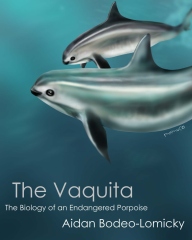
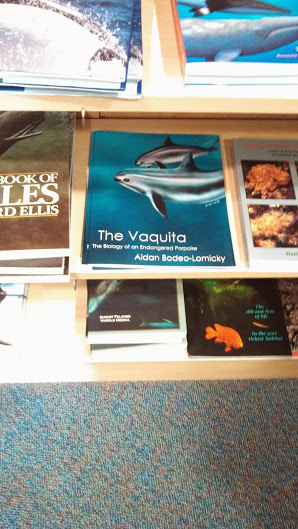
Also, today Cheryl Butner received her birthday present from Diane Glim (both of the American Cetacean Society), and guess what it was? My book! I am so thankful to both of them, and they even are purchasing 20 for the ACS’s Christmas fundraiser!
Today marks the beginning of Expedition Vaquita 2013! We wish you the best of luck ¡Viva Vaquita!
Let’s hope that they have a successful mission, including getting some good Vaquita photographs. If they start a blog during the expedition, I will post it here.
Today I got a surprise package in the mail from Dr. Thomas Jefferson. He sent me 7 books (some written by him, some about the Vaquita, and even one about the Baiji), a brochure, and a sticker as a thank you for me sending him 20 of my books. He has been so amazing to me, from answering my first ever Vaquita question, to sending me magazines and brochures in the mail. I just want to thank him for everything and wish him and the rest of the team the best of luck on Expedition Vaquita 2013, which begins Monday.
The contents of the package from Tom.
Vaquita-specific books, brochure, and sticker.
The North American Conservation Action Plan for the Vaquita, 2008.
On September 5, the Sonoran shrimp seasons commenced. The season generally begins in early September and ends in April, meaning you can shrimp during every month with the letter “r” in it. For the first ten days of the season, only artisanal panga fishermen, ribereños, are allowed to shrimp. But starting Sunday the 15th, the enormous trawling boats, cameroneros, are allowed to set sail. Both are of danger to the Vaquita unless they are outside of the Vaquita’s range and/or using Vaquita-safe trawls. This is an important time for Vaquita conservation because we will be able to see the Official Norm regulation hopefully be put into action. It would also be nice if all the fishermen follow the law and stay out of the Biosphere Reserve and Vaquita Refuge, but realistically, that’s not going to happen, at least not yet.
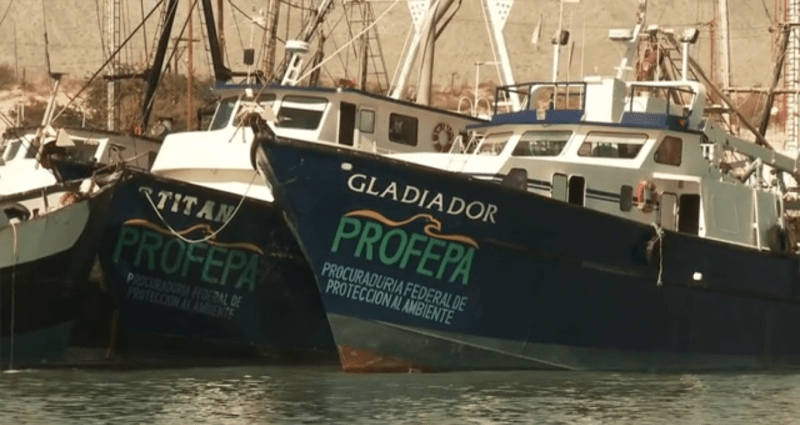
Hopefully PROFEPA (the part of the Mexican government in charge of patrolling the water for illegal fishing) will be out in large numbers trying to keep the reserves gillnet-free. That is another thing that will be very interesting to see during ¡Viva Vaquita!’s expedition starting the 23rd. Number one, if they see any fishermen, and if they do, what are they fishing with. I am not sure what they would do in that situation, and as cool as it would be for ¡Viva Vaquita! to go full-out Whale Wars on a tiny fishing boat using gillnets, I believe they would handle it very calmly and probably radio to PROFEPA, or something along those lines. The second thing that will be interesting to see will be if the ¡Viva Vaquita! team is spotted by PROFEPA, and if they are, will they be inspected for permits. Here is an excerpt from the blog of their 2010 expedition (hopefully they will have a blog this year too) about this very situation, which happened to be at the exact time they saw their only Vaquita during the entire 3-week trip:
“Captain Antonio sighted a Vaquita off the port-bow that surfaced twice and avoided the boat. We stopped to search, but at that same moment we were approached by the PROFEPA boat (Mexico’s environmental law enforcement agency) asking to see our permits. By the time the agents reviewed our paperwork, the Vaquita was gone. No one had been able to get any pictures. It was bad timing, but good to see the PROFEPA agents were doing their job.”
So my hopes for this year’s shrimping season is that no Vaquitas are killed by humans. This is definitely possible if the Official Norm is put into action and the fishermen follow the law. That way in the spring, when the calves are born, the Vaquita will finally begin its climb back from the brink of extinction.



 V-log
V-log 