The 97 Effect

meme

We live in a technological world. Smartphones run in our blood, and social media in our minds. Nowadays you can’t walk around without seeing someone posting a picture on Instagram or Tweeting about their brunch. Because this is what I have grown up with, it seems completely normal to me. But for many adults, this stuff must be equally intriguing, confusing, and infuriating. But love it or hate it, one thing is undeniable…

The internet is taking over.

And without the immense reach and power of social media, literally everything I do relating to the Vaquita would be impossible.

I learned about the Vaquita online, as I’m sure 99% of the people that know about the Vaquita did. I then got into contact with some Vaquita experts through email. Then, in 2011, I started this website, albeit with low expectations. Since then, countless opportunities have come up for me because of this blog, the best example being the Muskwa Club finding me. And social networks are even more effective.

I check Facebook and Twitter every day, and I am increasingly amazed by the impact the Vaquita is causing. Literally millions of people are learning about and being touched by the Vaquita’s story every day, especially recently. It’s almost like every day is a Vaquita Tweetstorm.

Every major news outlet has covered the Vaquita’s predicament, and it really is beginning to get in the pop culture limelight. It’s a shame it took there being only 97 (possibly only 88 now) Vaquitas left for this kind of attention to occur, but better late than never, right? The number 97 seems to really speak to people, which I am coining ‘the 97 Effect.’ And I am confident that all this recent exposure and outcry towards the Mexican government is what pressured them into creating the new ban (see previous post).

Here are just a few examples of the Vaquita’s newfound fame:

Clipping

Above is an example of news sources’ recent interest in the Vaquita. Maybe the number 97 has some magical qualities?

iFunny

Here is a screenshot from the Featured section of the extremely popular app, iFunny, featuring Save the Whales’ photo of a Vaquita model in a net. Notice how many likes and comments it already has (it was quite entertaining reading some of the 7,096 replies)!

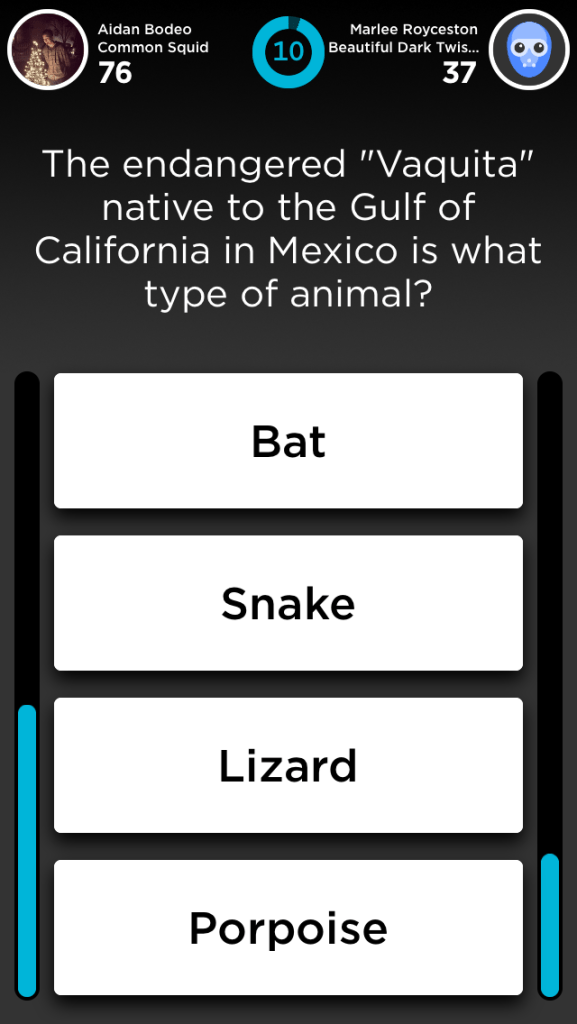
QuizUp

I was very excited to see my favorite app, QuizUp, have a trivia question about the one and only Vaquita in the Aquatic Life topic! (I think I know the answer). 😉

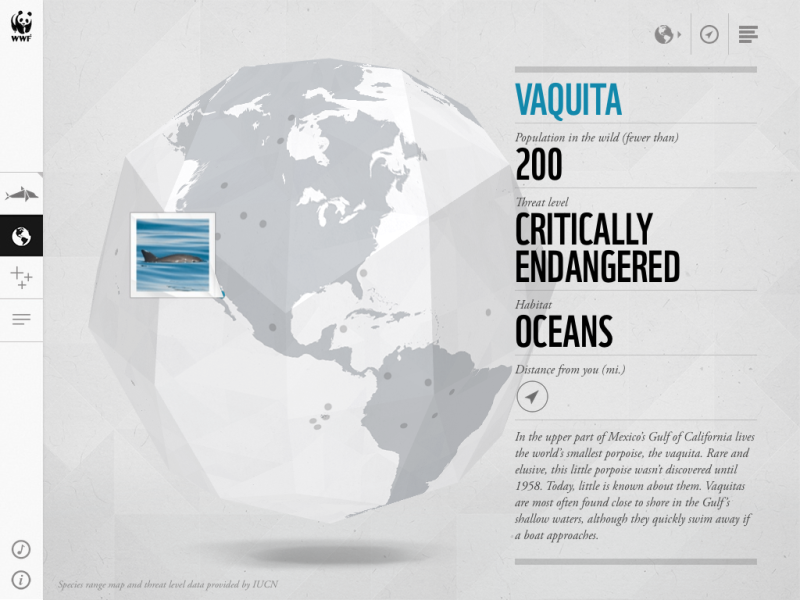
WWF Together

This screenshot is from the iPad app WWF Together, which is quite the immersive spectacle. This free app really makes you feel like you are in another world, both visually and sonically. If you have an iPad, this one is a no-brainer.

So thanks to the 97 Effect, the Vaquita is skyrocketing into fame. Using this exposure as a springboard, let’s make 2015 the best year yet for the Vaquita! A great start is donating to VIVA Vaquita (link in the top of the right sidebar, click on the baby Vaquita being carried). Thank you.

© Aidan Bodeo-Lomicky

© Aidan Bodeo-Lomicky


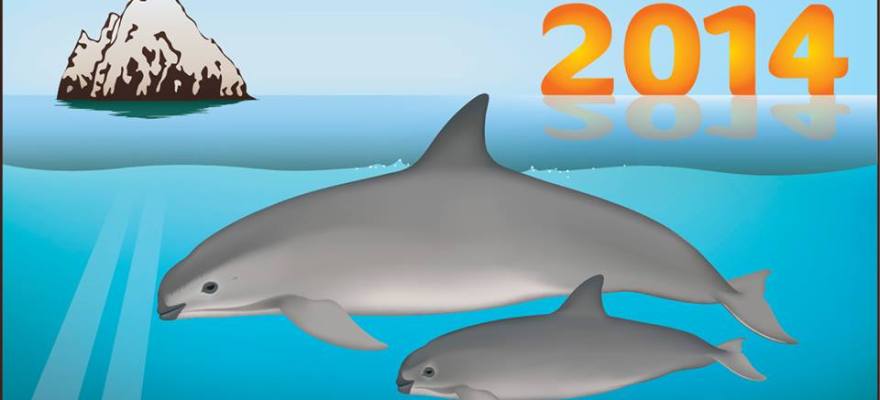
2014

2014, quite a year.

I’m sure this year was crazy for everyone in some way.

From the loss of Robin Williams to the Ebola outbreak, we have had a lot on our minds this year. However, many people had something new on their minds in 2014: the Vaquita.

This year was action-packed for our little hero. International Save the Vaquita Day was a smash hit, and everything was looking up with last year’s Official Norm law in mind. But this summer, we all took a blow to the gut: a new study showed only 97 Vaquitas remained.

It’s over then, right? 97? That’s too low to recover from. Especially if the government doesn’t make any changes. Well, they did change, but not for the better. They announced recently that they were NOT implementing a mandatory ban on gillnets in the Vaquita’s range, which is their only chance for survival. Not one person was able to stay completely optimistic at this point, and for good reason. It was basically over. Despedida, Vaquita.

But then, on the 25th, in what can only be described as a Christmas miracle, the unthinkable happened. The Mexican government announced a $37 million plan for a two-year ban on all gillnets in the Vaquita’s range, giving Muskwa enough time to perfect the Vaquita-safe nets as well as develop a long-term plan. Not only will the fishermen be paid to not fish, they can be paid to monitor the water for illegal fishing, therefore, in effect, converting the fishermen into “poaching rangers.”

This is the exact development that Vaquita conservationists have been suggesting for years. Now that this law will be in action, it is truly crunch time for us. Muskwa will be perfecting a cheaper and more effective Vaquita-safe net to distribute to the fishermen after the ban is over, as well as carrying out five other plans. All of us in the field of Vaquita conservation will be hard at work making the most of this valuable opportunity given to us by the Mexican government.

V-log had its best year in 2014, with over 9,300 views. And I was amazed to see the number of different countries that viewed my blog: 97. Sound familiar?

https://vlogvaquita.com/2014/annual-report/

Here’s to a much better 2015 for the Vaquita, because without that, there isn’t much hope for the species.

¡Viva Vaquita!

The rundown

I’m sure many of you who are reading this don’t really know what’s going on in the Vaquita world. And unless you are in VIVA Vaquita, I don’t really expect you to.

So here’s the rundown:

We all were crossing our fingers on Thanksgiving in hopes of the Mexican government’s Vaquita announcement being good news. In typical fashion, the announcement came over a week late. And it wasn’t really a public announcement. In summary, the announcement was that in San Felipe and El Golfo de Santa Clara (not Puerto Peñasco) shrimp (not corvina) gillnetting and longline fishing will be banned for a year, while compensating for the fishermen’s losses. At first, this sounds like good news, a strong start with a lot of potential success. Well, there’s one kicker they didn’t mention: it’s optional.

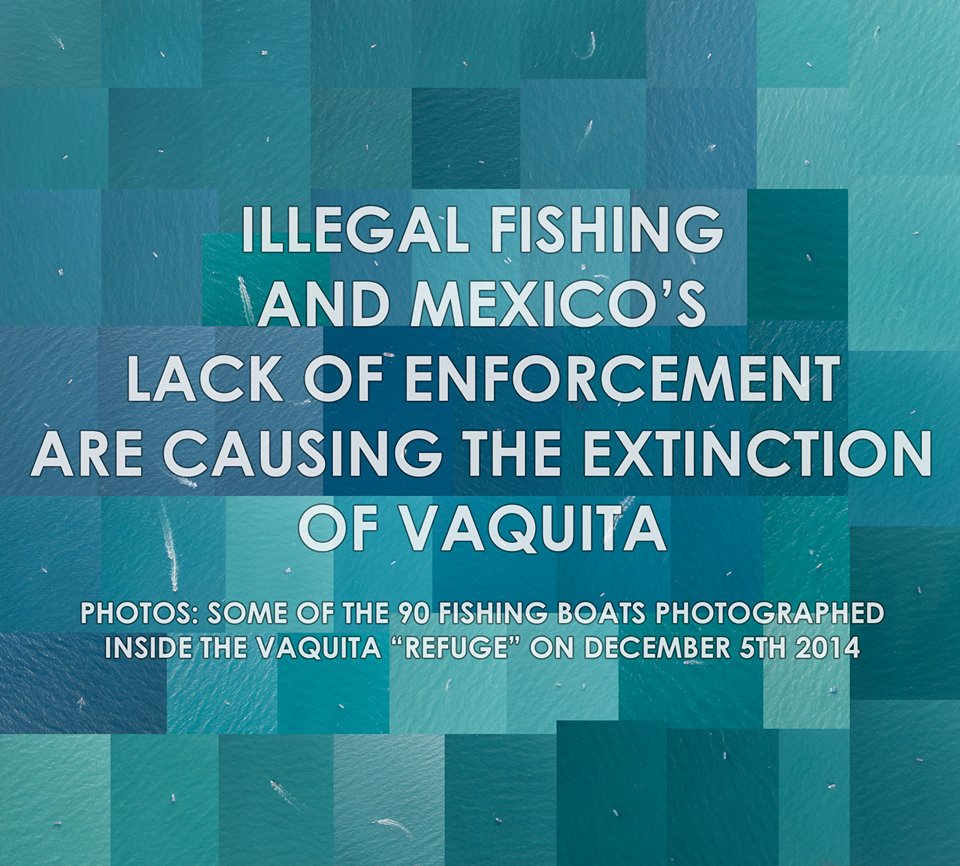
When I found this out, I felt like the world was collapsing. In terms of gillnet fishing, anything that’s optional means they aren’t going to do it. It’s just a plain fact. Even when it isn’t optional they still illegally fish. On December 5th, in the Vaquita Refuge, what is thought of as one of the few remaining safe havens for the Vaquita, 90 boats, many of which had gillnets were photographed in an aerial survey. 90. And that’s just in the Refuge.

Copyright © Joe Dlugo

Copyright © Joe Dlugo

So, it seemed to us at VIVA Vaquita that the Mexican government wasn’t taking CIRVA’s recommendations for a complete ban seriously. And after much, MUCH consideration and taking account for all variables and outcomes, here is the official statement from VIVA Vaquita:


URGENT ANNOUNCEMENT-

VAQUITA NEARING EXTINCTION!


In July 2014, at the 5th Meeting of the International Committee for the Recovery of the Vaquita (CIRVA), it was estimated that the Vaquita population had decreased to only 97 individuals, and the rate of decline had accelerated to an estimated 18.5% annually (CIRVA 2014). Recent evidence indicates that about 28 Vaquitas (29% of the current population) were killed in gillnets in the 2013/2014 period (Urrutia-Osorio et al. 2014). Despite CIRVA’s strong and urgent call for an immediate ban on all gillnets in the Vaquita’s range, as a critical measure to avoid the species going extinct in the next couple of years, the Mexican Government has not implemented any such ban. The shrimp gillnet fishery continues legally, and there is now rampant illegal fishing with gillnets inside the Vaquita Refuge. This is in addition to the illegal gillnet fishery for Totoaba, itself an endemic and endangered species, which has apparently expanded, and is now fueling the drastic decline in Vaquita numbers.

The Vaquita population most likely now numbers less than 90 individuals (perhaps much less), and is rapidly heading toward extinction, with a probable point of no return in the next year. Valuable time has been lost during the 2014 shrimp gillnet fishing season, with the Mexican Government delaying action, and vaquita numbers declining further.

In light of this, ¡VIVA Vaquita! is calling on the Mexican Government to immediately implement and enforce a two-year ban on all gillnets in the Vaquita’s range, as recommended by CIRVA. We ask all consumers to purchase and support only those Mexican seafood products (i.e., fish and shrimp) that have been caught with methods other than gillnets (methods such as trawls, longlines, or hook & line gear). Check product packaging for place of origin and ask your seafood servers/vendors to serve ONLY non-gillnet caught items. A two-year ban will buy time for the Vaquita, and allow for the full conversion of fisheries to more sustainable gear. Support for fishermen who are willing to use alternative gear (i.e., less damaging than gillnets) is essential for the survival of the vaquita, as well as other marine life in the Gulf of California.

References:

CIRVA (International Committee for the Recovery of the Vaquita). 2014. Report of the 5th Meeting of the International Committee for the Recovery of the Vaquita. Ensenada, Baja California, México, 8-10 July 2014, Unpublished Report, 38pp.

Urrutia-Osorio, M. F., A. M. Jaramillo-Legorreta and O. S. Osa-Nishizaki. 2014. Analysis of the artisanal fisheries’ fishing effort dynamics in San Felipe as a bycatch modeling tool for the vaquita (Phocoena sinus). Presentation at American Cetacean Society’s 14th International Conference, 7-9 November 2014, Newport Beach, CA.

We encourage you to avoid buying any seafood products from Mexico, unless you are positive they are from Vaquita-safe sources. This can only work if it spreads through social media like wildfire.

The Muskwa Club has also formed an extremely well thought-out five-part plan that we will begin implementing immediately.

The plan contains the following five parts:

1. Educate consumers in China and Chinese restaurants in America about the negative effects of the Totoaba trade for the Vaquita and the fish itself.

2. Design an efficient, cheap, and Vaquita-safe trawl net that will be given to fishermen as a replacement for gillnets.

3. Continue educating the public about the Vaquita’s plight, including International Save the Vaquita Day.

4. Reach out to celebrities due to their ability to raise funds for the ban and the safe nets, as well as begin a public outcry in favor of the Vaquita

5. Keep everyone’s spirits up in the Vaquita community. It is not too late for the species, unless we don’t work together or stay positive.

We will do everything in our power to make these five steps come true, but there is only so much a group of teenagers can do.

None of this will be possible without your generous support. We ask you to please donate to VIVA Vaquita, as now is a more important time than ever: http://www.vivavaquita.org/donations.html

VIVA Vaquita’s site has undergone a major makeover, which will be published any day now.

Another extremely helpful step you can take is to sign and share our Vaquita petitions, the newest being an urgent letter to the Mexican president and others: https://www.change.org/p/enrique-pe%C3%B1a-nieto-stop-the-extinction-of-the-vaquita-porpoise.

I am pleased to say the word is really getting out about the Vaquita. Nearly all of my relatives have called me saying they saw the Vaquita in the news, and my aunt even sent me this newspaper clipping:
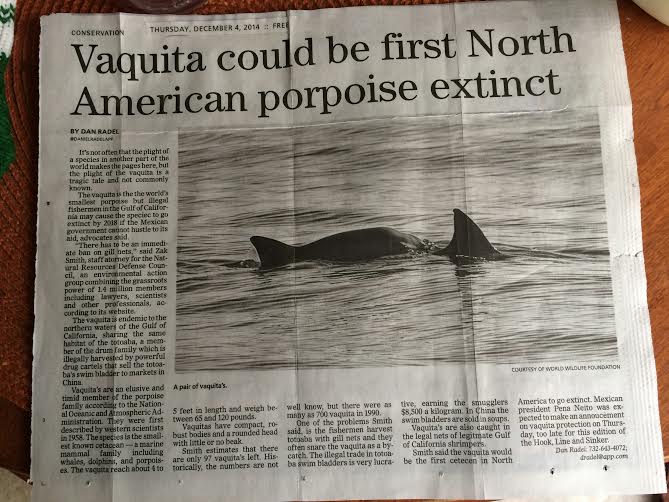
Clipping

And any time you need any motivation to help the Vaquita, just take a look at this picture:
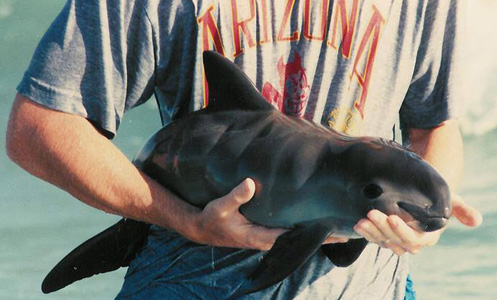
Vaquita Andrew Wright

Vaquita gift ideas

With the holidays right around the corner, now’s the time to start buying gifts for your loved ones. Money is tight these days, so gifts where some the proceeds go to a good cause is a great deal. Luckily for you, there are many such gifts that are related to the Vaquita! Let’s take a look.

The CEDO Eco Shop is a wonderful place to buy awesome gifts for the holiday season. From Vaquita t-shirts to booklets, to even a special link to Amazon that gives a portion of any purchase to CEDO, they have it all.

CEDO works extensively with the Vaquita, so it is one of the best charities to donate to.

Another wonderful holiday gift for that special someone would be CEDO wine, complete with one of six creatures of the Gulf on the label (of course including the Vaquita). And a portion of the proceeds goes to CEDO!

http://www.benefitwines.com/CEDO-Intercultural_c_1826.html

The VIVA Vaquita La Tienda has some wonderful Vaquita-specific items, with a new collection by Memuco: http://www.printfection.com/vivavaquita/NEW–memuco-vaquita-items/_s_583346

A perfect gift is the Adopt-a-Vaquita kit from Save the Whales. For $25 you get:

  • An 8 x 10 glossy color photograph of a Vaquita in the wild
  • Adopt-a-Vaquita certificate personalized to your specifications
  • 4 page color newsletter about Vaquita
  • A letter to the United Nations for your signature
  • Save The Whales window sticker
  • VIVA Vaquita window sticker
  • A Vaquita dog tag necklace (suitable for all ages and both sexes)

With the second edition of the world’s only Vaquita book coming in the near future, you might want to keep it in mind: https://www.createspace.com/4268018

And my final suggestion is a Save the Vaquita! t-shirt from the Muskwa Club’s campaign, with 100% of the proceeds going to this non-profit. Remember, if 34 t-shirts are not bought, none will not be printed. So please, support a great cause and look stylish while you do it: https://www.booster.com/savethevaquita97

Time for action

97. There are 97 Vaquitas left on this planet. For every Vaquita on earth, there are 82 million people.

To date, nothing that has been done to save them has worked. It is a harsh reality for all of us in the field of Vaquita conservation, and now there is the threat of Totoaba fishing for the Asian black market, which we didn’t think was occurring in substantial amounts anymore.

A big change is necessary if we plan on saving this species. We have been incredibly diplomatic with the fishermen, but obviously it has not been working. We need help from very important people, and we will certainly try our hardest to make that happen. Please read this message from ¡VIVA Vaquita!: http://www.vivavaquita.org/VV_Emergency2014.html.

¡VIVA Vaquita! is requesting that the Mexican Government do everything in its power (and make full use of assistance offered from other countries, such as the United States) to eliminate all gillnet fishing in the Vaquita’s range in the next two months. If this does not happen, we will immediately begin campaigning for a boycott of ALL Mexican seafood products, until such time that the ban is considered to be in effect.

Right now, the most important thing that the general public can do is sign and share this new petition from the Ocean Conservancy:

http://act.oceanconservancy.org/site/MessageViewer?dlv_id=41469&em_id=30824.0


Graphic © Joe Dlugo

Graphic © Joe Dlugo

It is vital that everyone shares the Vaquita’s predicament on social media before it is too late. If you have not already, “like” ¡VIVA Vaquita! on Facebook for important updates.

A good example of social media helping a cause is “Changing Hearts, Minds, and Lives.” They are a Facebook group (of which I am a member of) that uses social media to spread the word about important environmental issues, such as the Vaquita.

Countless major news companies have been attracted to the Vaquita’s story, but unfortunately, it’s because of how close to extinction it is. Hopefully this new level of recognition can have a positive impact on the species.

If you live near the Point Vicente Interpretive Center in Rancho Palos Verdes, CA, then please attend their book signing on Saturday, November 8th, from 11:00 am to 1:00 pm. Beth Whittenbury will be representing my book there, so please pay her a visit and buy my book! Thanks so much Mrs. Whittenbury!

Lauri Hamilton has submitted a video for National Geographic’s Expedition Granted program for a chance at a $50,000 grant to go out and film Vaquitas. Please vote for her on September 16 if she is one of the finalists! She used one of my drawings for the video, which I am very thankful for. Here is the link: http://expeditiongranted.nationalgeographic.com/project/the-vaquita-project/.

If we all work together to save the Vaquita, it really does have a chance…

Now is the time for action.

International Save the Vaquita Day tomorrow!

I want YOU

If you haven’t already heard, tomorrow (or today in some places), Saturday, July 12, is International Save the Vaquita Day. ISTVD is a day dedicated to protecting the innocent little Vaquita. The world has been rough to this petite porpoise, and tomorrow is a chance for us to start paying it back. So what will you be doing for International Save the Vaquita Day? Below is a list of confirmed venues for tomorrow. Please check out Facebook or email me at <gl.tamarin123@gmail.com> to find out what times the tables will be. If you can’t find out, a good bet is late morning, and most tables will last for at least a 3-4 hours. Please click here to spread the word, and here to sign VIVA Vaquita’s petition. For a lot more information on ISTVD, check out: https://vlogvaquita.com/international-save-the-vaquita-day-2014/. And if you can’t make it to one of these tables, there will be a Tweetstorm going on tomorrow; all you have to do is write a tweet that includes the hashtags “#SaveTheVaquita” or “#ISTVD” to help make them trending worldwide. If you want, you can check out @vlogvaquita for some pre-written Vaquita tweets that you can copy and paste for the Tweetstorm.

Thanks to everyone who plans on participating in ISTVD and a huge round of applause to all of the organizers!

List of Events & Locations:

UNITED STATES

CALIFORNIA
Long Beach, CA
Aquarium of the Pacific

Monterey, CA
American Cetacean Society – Museum of Monterey, Custom House Plaza

Rancho Palos Verdes, CA
Point Vicente Interpretive Center

San Diego, CA (4 sites)
• Cabrillo National Monument, Pt. Loma
• Living Coast Discovery Center, Chula Vista
• SD Natural History Museum, Balboa Park
• Tecolote Shores, South, Mission Bay Park

San Pedro, CA
Cabrillo Marine Aquarium

Santa Cruz, CA
Save The Whales – Monterey Bay National Marine Sanctuary Exploration Center

ARIZONA
Biosphere 2 (10 am to 2 pm), Tucson

HAWAII – OAHU
Marriott’s Ko Olina Beach Club, Kapolei
Waikiki Aquarium, Honolulu

OREGON
Oregon Coast Aquarium, Newport

VIRGINIA
Virginia Aquarium, Virginia Beach

AUSTRALIA
Southern Cross University, East Lismore, NSW
Community Center, Byron Bay, NSW

AUSTRIA
Vienna

CHINA
Hong Kong Dolphin Conservation Society, Hong Kong

MEXICO
Dr. Jorge Urban – Estudiantes Somemna, La Paz

NETHERLANDS
Warnsveld, Gelderland

Thanks to William Whittenbury and the Muskwa Club for arranging many of these locations & making the map below.

Map View of International Save The Vaquita Day 2014

World Oceans Day 2014

Happy Memorial Day!

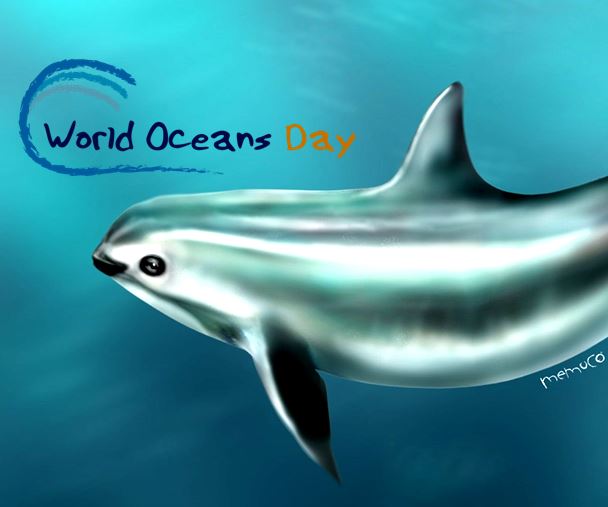
Sunday, June 8th, is World Oceans Day 2014! Like last year, my family will be hosting a table in Boston’s New England Aquarium for their World Oceans Day celebration! Please join us between 11:00 am and 4:00 pm for a day of fun, learning, and conservation!

World Oceans Day Vaquita

The New England Aquarium is big on ocean conservation, and has created the live blue™ Initiative, a project that protects endangered marine species and their habitats. I look forward to educating the public on one of the planet’s rarest and least-known species, the Vaquita, at this wonderful aquarium.

Please check out this really neat website about bycatch, with great statistics and graphics: http://www.bijvangst.org/en/home

Elaborating on my last post, Project #ChangeOurPerception, here is Anthony Bourdain’s blog, which talks a lot about the evolving food culture of Mexico, and The Truth About Mexico, a great Facebook page showing the positive truth about this extremely misunderstood and under-visited country.

Below are some photos of the Vaquita-related things that I have gotten in the past few months:

My dad’s Vaquita calf carving, to go with the mother he made earlier:

Calf Carving

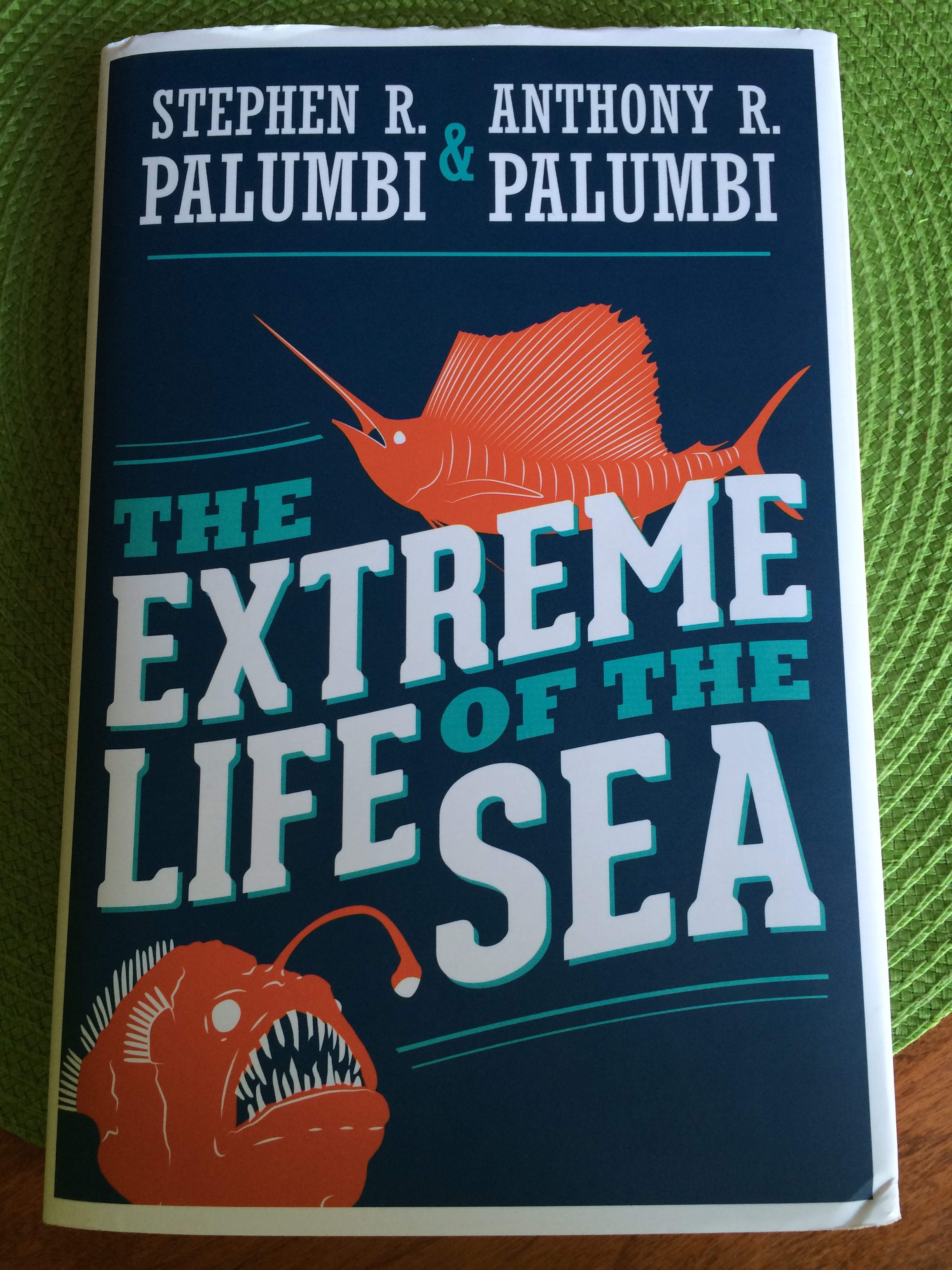
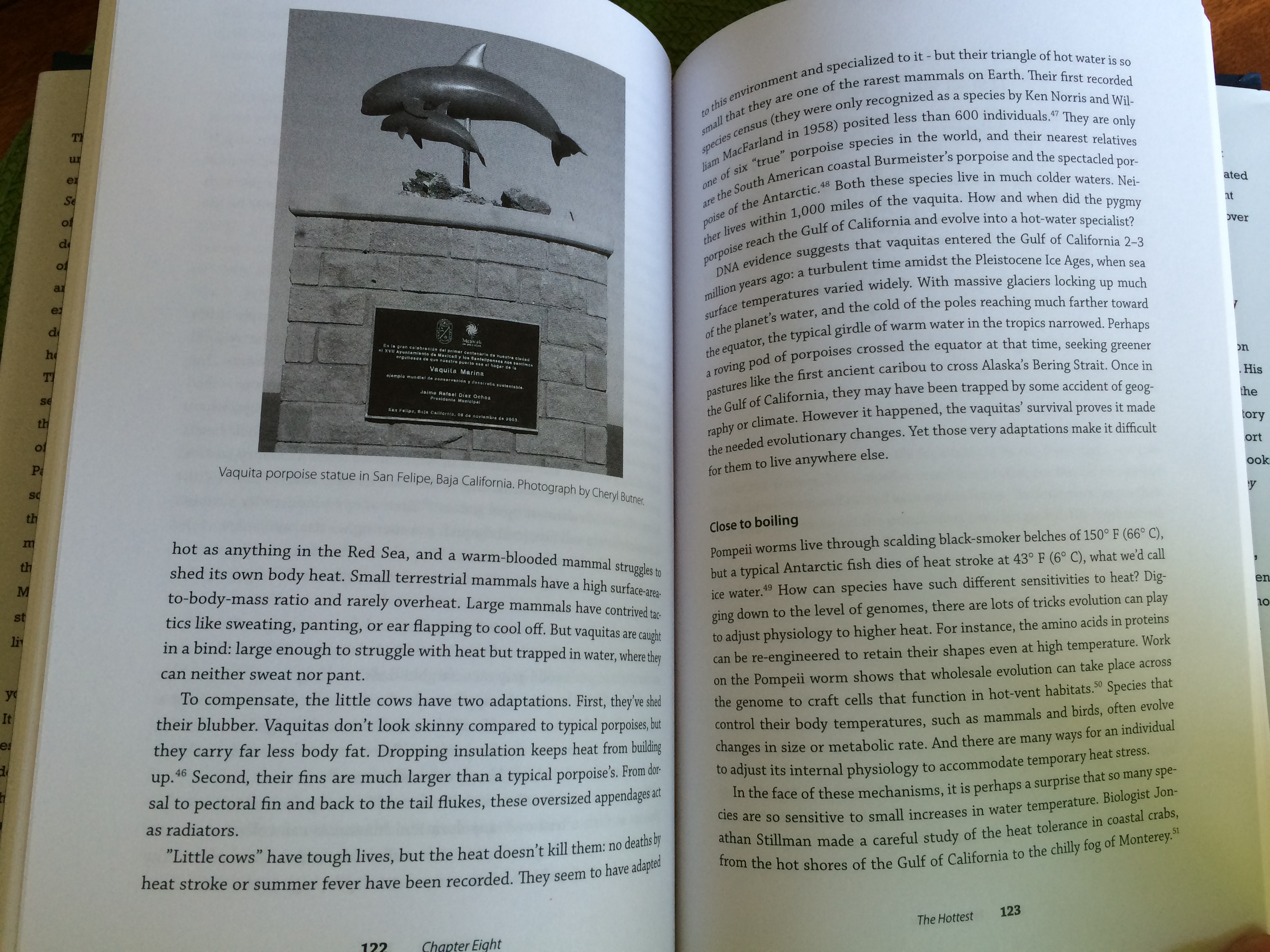
Stephen and Anthony Palumbi’s book, The Extreme Life of the Sea, which contains a few pages about the Vaquita:

The Extreme Life of the Sea cover

The Extreme Life of the Sea interior

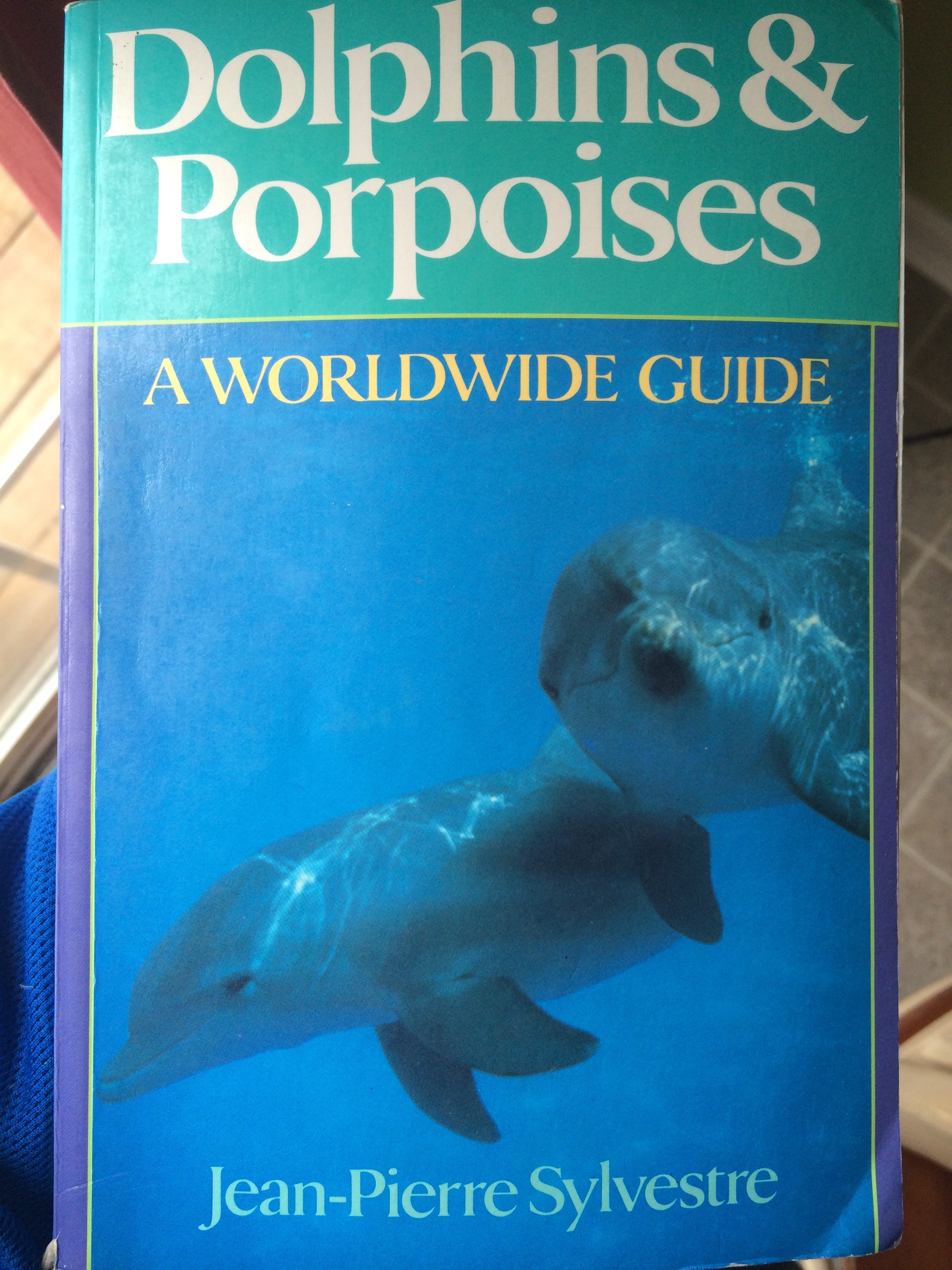
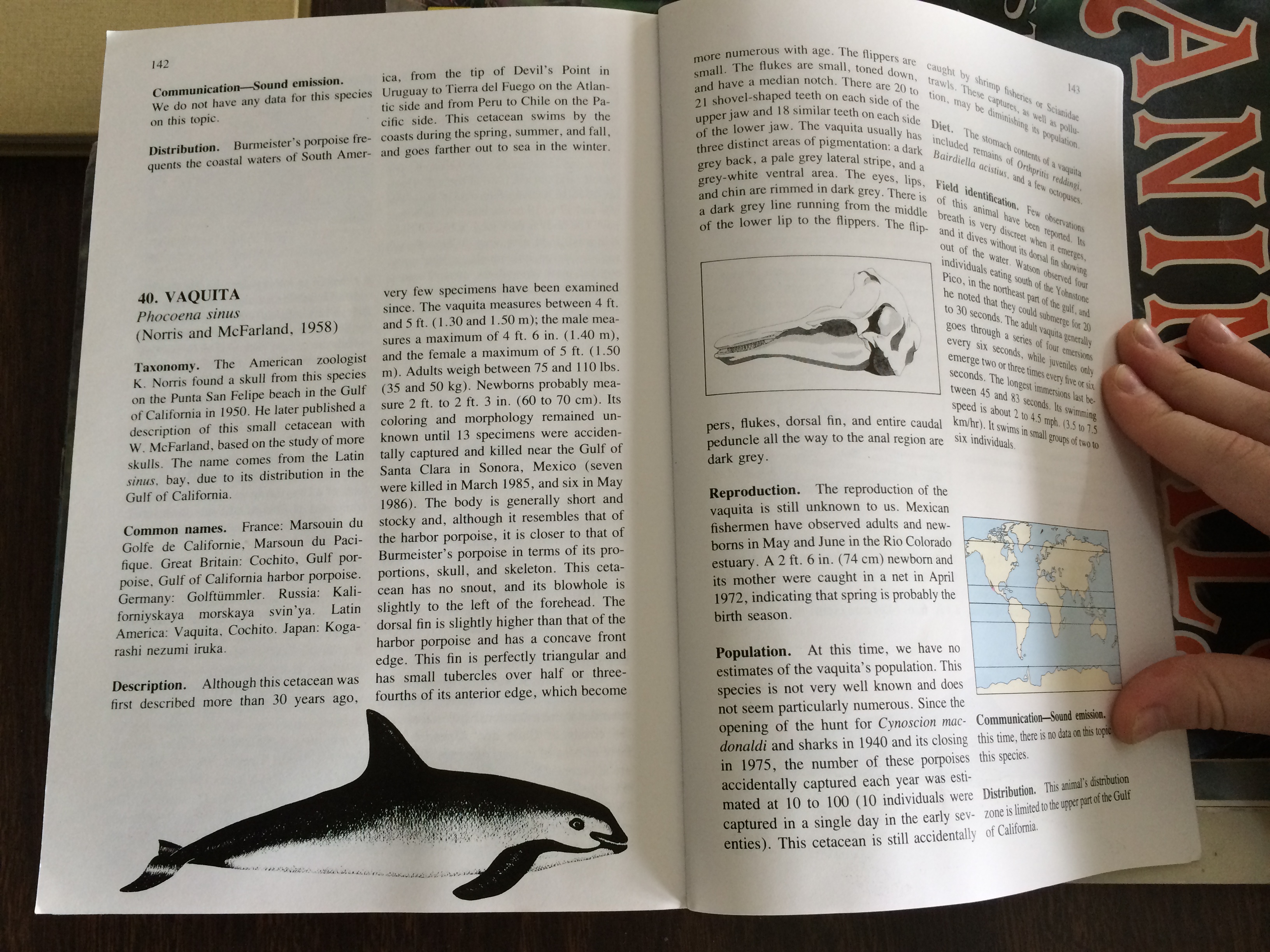
Jean-Pierre Sylvestre’s Dolphins & Porpoises: A Worldwide Guide, which we found in an old book shop:

Dolphins and Porpoises

Dolphins and Porpoises interior

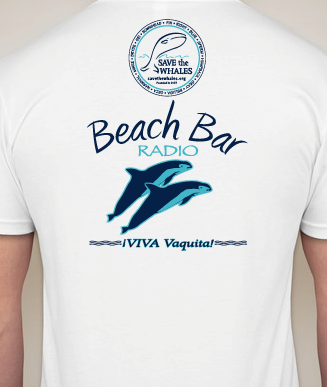
Beach Bar Radio and Save the Whales/VIVA Vaquita’s awesome shirt from their Booster campaign:

Save the Whales back

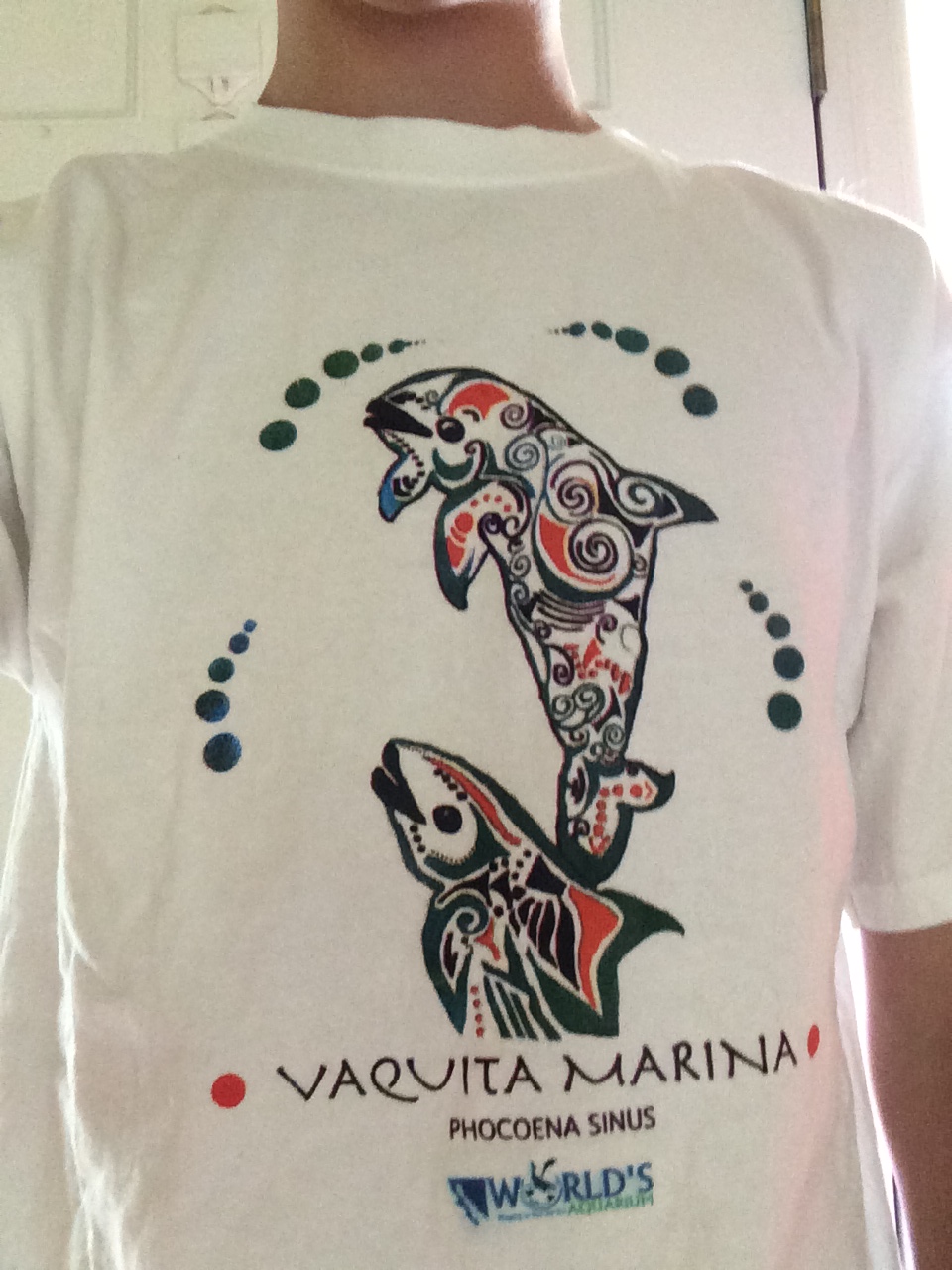
And this cool t-shirt from Vince Radice’s Vaquita documentary Indiegogo campaign:

Vince Radice Shirt Front

VIVA Vaquita petition

Here is an extremely important message from VIVA Vaquita:

“Dear Vaquita Supporters,

We have a BIG GOAL to meet for a small porpoise that desperately needs your support now! With over 20,523 signed supporters so far, we still need 29,477 more to reach our 50,000 goal before International Save The Vaquita Day on July 12, 2014.

Please take a moment to simply sign our petition to help Prevent the Extinction of the Vaquita Porpoise.

Thank you from ¡VIVA Vaquita!

Prevent the Extinction of the Vaquita Porpoise – the world’s most endangered marine mammal!
http://www.change.org/petitions/prevent-the-extinction-of-the-vaquita-porpoise-the-world-s-most-endangered-marine-mammal

¡VIVA Vaquita! Coalition’s Goals & Mission:

VIVA Vaquita is a coalition of like-minded scientists, educators, and conservationists, who would like to increase the attention given to the Vaquita, the World’s most endangered marine mammal species. Our goals and mission are to generate awareness of the Vaquita and to promote a healthy Upper Gulf of California ecosystem. We conduct research, public awareness and education activities to bring this about. Ultimately, we aim to help save the Vaquita from extinction, and to do so in a way that also provides long-term benefits to the fisherman and other residents who live around the Gulf of California, Mexico.

http://www.vivavaquita.org/
http://www.cetosresearch.org/
http://www.savethewhales.org/
http://acsmb.org/
http://www.cedointercultural.org/
http://www.oers.ca/
http://www.muskwaclub.org/
https://vlogvaquita.com/

https://www.facebook.com/l.php?u=https%3A%2F%2Fwww.picbadges.com%2Fbadge%2F3581249%2F&h=SAQGnX4Em&s=1

#SaveTheVaquita

Please share this!

T-shirts and more

Hurry up! There are only a few hours left to buy an awesome Save the Whales/VIVA Vaquita t-shirt with the profits going to the Vaquita!

https://www.booster.com/vivavaquita

For the entire month of April, VIVA Vaquita will be the recipient of Mahalo Mondays at Hula’s Island Grill and Tiki Room in Monterey, California, so please eat and/or drink there on Mondays in April. 10% of Hula’s sales from 4:00 pm until closing on Mondays will go to VIVA Vaquita this April!

TakePart and WWF have teamed up to create a March Madness-like bracket for endangered animals! Please vote on the matchups and TakePart will donate up to $2,500 to WWF! The World Wildlife Fund is one of the biggest Vaquita supporters, so it really is important that you vote once a day until April 9!

http://www.takepart.com/animalbracket

Also, my book will soon be for sale in the Hau’ula Gift Shop on the Windward side of Oahu, Hawaii, in the Ching Jong Leong store building in Punaluu. The gift shop is run by Fawwaz Jubran, and is mentioned in this article: http://www.hawaiibusiness.com/Hawaii-Business/January-2008/Roadside-Attraction/.

If you are in the area, please join the Muskwa Club at their Vaquita table during the Point Vicente Interpretive Center’s ‘Whale of a Day’ on April 5 from 9:30 am to 4:30 pm! The event promises to be informative, exciting, and simply a whale of a time. 😉

Finally, thanks to everyone who participated in the Post-a-day Challenge. I hope that many people learned about the Vaquita this month, but let’s not stop! Keep sharing the Vaquita love!

Thanks

Beyond the surface

—with special guest co-author, VIVA Vaquita’s Cheryl Butner

Once you break through the surface, the Vaquita’s situation is extremely dynamic and complex. From afar, it may seem like a simple ‘problem and solution’ scenario. It is anything but.

There are a few realistic ways that the Vaquita can be saved. One is if the fishermen stop fishing and take up different careers. The other is if they continue to fish but with Vaquita-friendly fishing gear. Both haves positives and negatives, and both will be difficult to do.

There aren’t many viable career options for the people of the Gulf. You could own a shop, restaurant, or hotel, but these businesses are not going to be able to sustain a large family due to a lack of tourism. However, there is one form of tourism that could be a game-changer: ecotourism. Ecotourism is defined as “responsible travel to natural areas that conserves the environment and improves the well-being of local people.” I have received many questions about this, and some people even said they were going on one of these tours to search for Vaquitas. I am filled with hope by seeing how many people would be willing to look for the Vaquita to support the fishermen who have switched careers from exploiter to explorer, but it is unfortunately not that simple. Cheryl Butner takes a closer look:

“A permit from the Mexican government is required to enter the Vaquita refuge, generally for research or scientific purposes. It is important that tourists realize that looking for Vaquita is not like going on a couple-hour whale watch trip. The areas where Vaquita have been spotted are not close to shore, Rocas Consag, which is the “center” of the Vaquita Refuge is something like 17 miles from San Felipe, as I recall it took us 2.5+ hours just to get out to the reserve one way from San Felipe, but our boat was pretty slow. Once you are out there, chances are incredibly slim that you will see Vaquita since they are so shy of boats and so small. It is was very common for fishermen to tell me that in the 20-30-40 years they have been fishing in the area they’ve never seen a Vaquita. In theory tourists could hire a boat to cruise around the outside of the refuge, but as long as they are aware it would be more to enjoy the Sea of Cortez and maybe see some whales, sea lions, rays, but not to get their hopes up about seeing Vaquita.  The Upper Gulf of California is a fantastic place to visit with its beautiful beaches and deserts, world-famous fishing, a wide variety of watersports, wonderful people, and incredible food (but don’t order seafood caught with gillnets!).  The best ways tourists can help Vaquita are (1) travel to this region and encourage their friends and family to travel here as well, (2) talk to everyone they meet and tell them they know about the Vaquita and they want to protect it from extinction, and (3) support the businesses that support the Vaquita.

But if travelers still want to attempt to see a Vaquita, they should go to San Felipe. Puerto Peñasco is pretty far from the refuge, unless they wanted to do a multi-day boat trip. As far as size of these communities, Puerto Peñasco is the biggest and has the most services for tourists and locals. There are fancy resorts, tour companies, everything you could want. San Felipe is smaller than Puerto Peñasco but still has the main things tourists are looking for. El Golfo de Santa Clara is very small, basically a fishing village with few tourist amenities. Most tourists that go there camp on the beach in their RVs and there are a few restaurants and a couple small hotels. I’ve heard that drug smuggling is pretty prevalent in Santa Clara, although I’m sure it’s well hidden from the few tourists that go there. I was there for a day so I wasn’t there long enough to make many observations.

Tourism in that region is actually really interesting. With the American tourists being scared away for several years now because of what our media is telling them, there have been the obvious really bad consequences, like any businesses related to tourism are struggling to stay open, if they haven’t closed already. But there has been a positive side to this too, in my opinion. As an example, I’ve been going to Tijuana for over 20 years. Before all the drug wars in Mexico and economy crashing in the US, it was pretty much like you would see in the movies, a lot of gringos going down there to drink, party, pick up prostitutes, get drugs (legal and illegal), and little kids on the streets begging for money. Now that the American tourists are pretty much gone, Tijuana has really cleaned up and is actually starting to be known as a cultural and food capital. Many newspapers, blogs, etc. have written about how Tijuana is a new gourmet food destination and even some of the shows on the Food Network and Travel Channel have featured Tijuana. Plus the economy in other parts of Mexico (particularly in the big cities) was not as hard-hit as the US was, so the numbers of Mexicans traveling and vacationing in their own country is way up, which is really great. So you see some of this in the Upper Gulf towns as well, especially with more Mexicans vacationing there now than there used to be. Hopefully the number of Mexican tourists will continue to grow to help make up for the drastically reduced numbers of American tourists, which will probably stay really low for a long time.

All of this makes me wonder if, in cities like Tijuana anyway, the American tourists had more of a negative influence than a positive one. Hopefully after Mexico gets control over the drug problems and is able to overcome this unwarranted stigma of being a dangerous country, it will be able to reinvent its image and get away from being known by Americans as a wild party destination, because the country has so many diverse and incredible experiences to offer tourists. It’s already starting in Tijuana, so hopefully the positive changes will continue.

CEDO’s website has a several year old list of businesses that switched from gillnet fishing during the buy-out program. I’m not sure how many of them are still operating.  From what I’ve heard the program didn’t go well because the American tourists stopped coming right around the time a lot of these businesses were just starting out, so they pretty much lost everything. I’ve even heard that some of them may have gone back to fishing to be able to support themselves and their families, if so that would mean they are fishing illegally since many gave up their permits in the buy-out,.  And who could really blame them really if they did. They thought they were doing the right thing and ended up getting burned. It was nobody’s fault, nobody could have foreseen the tourists completely disappearing in such a short period of time.  It’s important to remember that without the fishermen’s support, saving the Vaquita will be incredibly difficult, if not impossible.  That is why everyone – the Mexican government, the local communities, the NGOs, and anyone who cares about the Vaquita – needs to work together in order to prevent its extinction.”

Cheryl and I agree that the more feasible of the two options I mentioned earlier is the switch-out, where the fishermen use alternative fishing gear. There already is the Official Norm law, which is phasing out all shrimp gillnets with Vaquita-safe trawls within the next 3 years, starting in 2013. This is, as Lorenzo Rojas-Bracho put it, “pretty damned good news.”

There is still the gaping hole of finfishing, which could be even more dangerous to the Vaquita than shrimping. The development of effective, Vaquita-safe finfish nets is absolutely mandatory within the next few years if we hope to save the desert porpoise.

So, where does this leave us?

The average person will never see a Vaquita in their lifetime. They are one of the rarest and most secretive animals on Earth. And realistically, you cannot help with things like the development of new fishing gear and assisting fishermen with career changes. But there are still ways that you can make a real difference for the Vaquita. Spreading the word to people that you think could help such as celebrities and animal lovers (or both) is a great way to start (the Post-a-day Challenge is still going on!). Next you could cook for the Vaquita, or buy a VIVA Vaquita t-shirt. Also, my book can teach you a lot more about the Vaquita, while its profits go directly to Vaquita causes.

The important thing is that you are doing something. There are endless ways to help the Vaquita, so go ahead, make a marine mammal proud today.